The Surron throttle is the part you touch more than any other on the bike, so when it sticks, cuts out or feels jumpy, the whole ride goes wrong. The good news is that most Surron throttle faults come down to a handful of simple causes, and nearly all of them can be checked at home with basic tools.
In this guide we explain how the Surron throttle works, the seven most common faults and their fixes, how to test the hall sensor with a multimeter, and when it makes sense to upgrade to a different style. Everything here applies to the Light Bee X, the new Light Bee 2 and the Ultra Bee, with notes where the models differ. Figures and part prices are current as of October 2026.
How the Surron throttle works
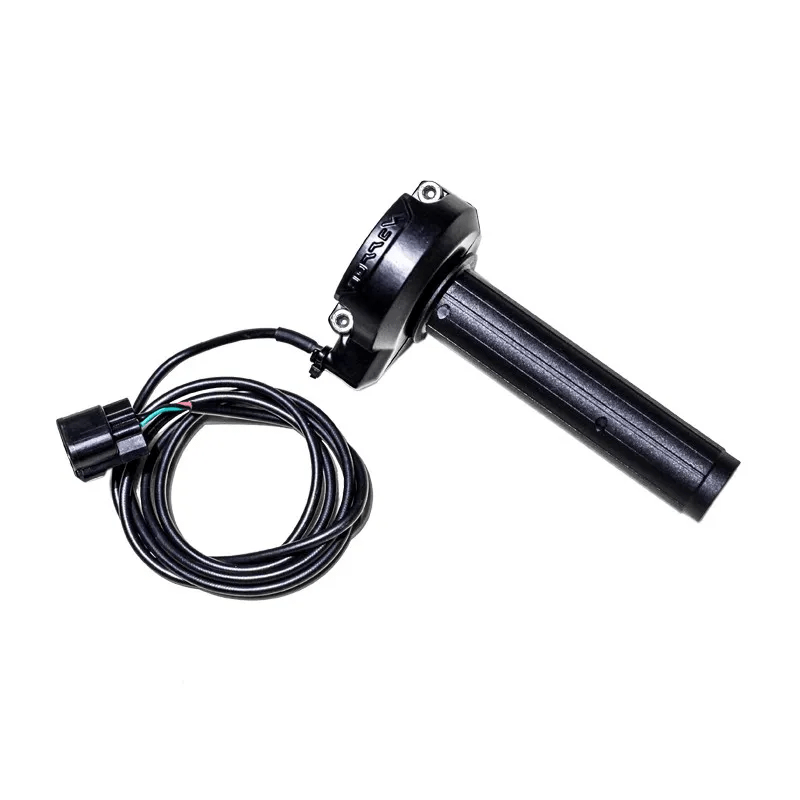
Unlike a petrol bike, there is no cable pulling open a carburettor slide. The Surron throttle is an electronic twist grip with a small magnet and a hall-effect sensor inside the housing. As you roll the grip, the magnet moves past the sensor and the output voltage rises. The controller reads that voltage and decides how much current to send to the motor.
That design has three big advantages. It is light, it has almost no friction, and it lets the controller shape the response through riding modes. It also means the throttle has three wires: a 5 V supply from the controller, a ground, and a signal wire that carries the variable voltage back. If any one of those three goes wrong, the bike either will not move or moves when it should not.
If you want the electronics in more detail, the principle behind the sensor is explained well in this overview of the hall effect sensor. For riders, the key point is simple: the grip is a sensor, not a mechanical link, so most faults are about voltage, connections or the return spring.
Typical signal voltages
Most hall throttles used on electric dirt bikes sit at roughly 0.8 to 1 V when closed and climb to around 4 V when fully open. The controller ignores the bottom of that range as a dead band, which stops the bike creeping forward from tiny movements. If your reading sits well outside those numbers, something is wrong with the sensor or the wiring feeding it.
Riding modes change the feel, not the hardware
The Light Bee X has Eco and Sport modes, and the Light Bee 2 and Ultra Bee add more. Changing mode does not change the grip itself. It changes how the controller maps the same signal to motor current. That is why a grip that feels lazy in Eco can feel sharp in Sport, even though nothing physical has changed.
Signs your Surron throttle has a problem
Before you buy parts, match the symptom to the likely cause. These are the signs riders report most often:
- The bike does nothing when you twist, but the display is on.
- Power cuts in and out over bumps or when you turn the bars.
- The grip does not snap back closed when you let go.
- The bike surges or lurches at small openings.
- There is a delay between rolling on and the motor responding.
- An error code appears on the display after a wash or a wet ride.
A sticky return points to the mechanical side of the grip. Cutting out over bumps points to a connector or a chafed wire. No response at all usually means a supply or signal problem, but check the kill switch and side stand sensor first, because those stop the bike just as effectively.
7 proven Surron throttle fixes
Work through these in order. They start with the quickest checks and move on to the jobs that take more time. Always switch the bike off, lift the rear wheel off the ground and remove the key before you open anything.
1. Check the kill switch and safety cut-offs
It sounds obvious, but a huge share of “dead Surron throttle” problems are a bumped kill switch, a side stand switch that has not reset, or the brake lever cut-off sticking on. The controller will ignore the throttle while any of these is active. Flick the kill switch both ways, lift the stand, pull and release both brake levers, and try again.
2. Clean and reseat the connector
The Surron throttle plugs into the loom under the headlight or front plastics. Mud and pressure washing push water into that plug. Unplug it, look for green corrosion or bent pins, spray it with electrical contact cleaner, let it dry, and add a smear of dielectric grease before you reconnect it. This one job fixes a lot of intermittent cutting out.
3. Inspect the wire where it leaves the bars
The cable runs from the grip, around the steering head and down the frame. Every time you turn the bars, it flexes. Over time the insulation can rub through on the frame or a cable tie. Turn the bars lock to lock while you watch the cable. If power cuts at one lock but not the other, you have found the damaged section of the wiring.
4. Free up a sticky return
If the grip is slow to close, the cause is usually dirt in the housing, a grip that has been pushed too far onto the tube, or a lever perch clamped against it. Loosen the housing screws, slide the grip out a millimetre so it does not rub the end of the housing, clean out old grease and grit, and apply a little light grease. A grip that does not close on its own is a safety problem, so do not ride until it snaps back cleanly.
5. Test the hall sensor with a multimeter
With the bike on and the rear wheel lifted, back-probe the three wires at the connector. You should see about 5 V between supply and ground. Then measure signal to ground while you slowly roll the grip open. A healthy sensor rises smoothly from under 1 V to about 4 V with no jumps or dropouts. If the supply is missing, the problem is upstream in the loom or controller. If the supply is fine but the signal is flat or jumpy, the sensor is faulty.
6. Recalibrate after a controller change
Aftermarket controllers often need to learn the throttle range. If you have fitted a new controller and the bike feels lumpy or will not reach full power, run the throttle calibration in the controller app or display menu. The throttle itself may be fine; the controller just does not know where closed and fully open are.
7. Replace the Surron throttle assembly
If the sensor fails the multimeter test, or the housing is cracked after a crash, replace the unit. A genuine-style replacement is cheap compared with chasing a fault for weeks. We stock a replacement Surron electronic throttle for $60.50, which plugs straight into the standard loom.
Twist vs thumb: which Surron throttle style suits you?
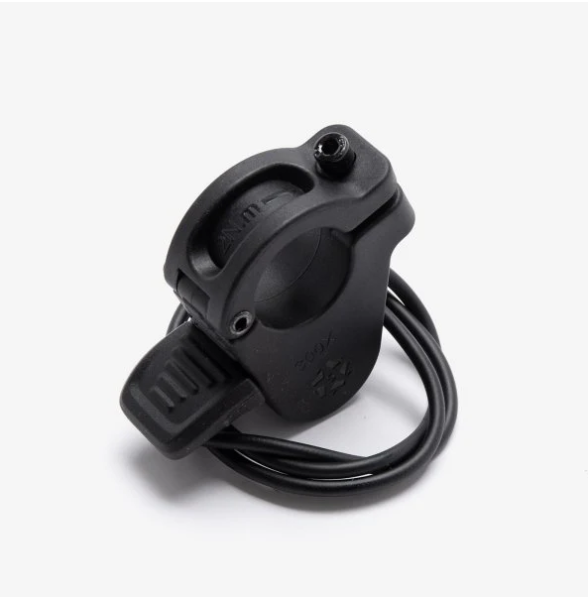
The standard Surron throttle is a twist grip, like a motorcycle. Some riders swap to a thumb throttle, especially when they fit an aftermarket controller kit. Here is how the two compare.
| Feature | Twist throttle | Thumb throttle |
|---|---|---|
| Feel | Familiar for motorcycle riders | Familiar for e-bike and quad riders |
| Fine control | Excellent with wrist movement | Good, but uses one thumb |
| Fatigue on long rides | Low for most riders | Can tire the thumb on rough trails |
| Crash damage | Housing can crack on impact | Lever can snap but is cheap |
| Grip choice | Limited to throttle-tube grips | Any grip can be used |
| Typical cost | About $60 | About $40 |
For most riders the twist grip is the better long-term choice, because it lets you feather power while you stand on the pegs. If you are running an X-9000 controller and prefer a thumb lever, the X-9000 thumb throttle is a tidy option at $38.50. Either way, the unit you choose must match the connector and voltage of your controller.
Surron throttle response and riding technique
A lot of complaints about a “twitchy” Surron throttle are about technique, not hardware. Electric motors deliver torque instantly. A petrol 125 builds power as revs rise, but an electric motor gives you its peak pull from a standstill. Small wrist movements therefore have a big effect.
A few habits make the power delivery feel far smoother:
- Ride in a lower mode until you are used to the instant torque.
- Keep your wrist low on the grip so you roll on gradually rather than snapping it open.
- Cover the rear brake on technical climbs so you can balance power against braking.
- Use regen, where your bike has it, to smooth corner entries.
- Stand up on rough ground so bumps do not jolt your wrist and open the grip.
Riders coming from mountain bikes often find a thumb throttle easier at first. Riders from motorbikes usually prefer the twist. There is no wrong answer, but the stock Surron throttle rewards practice in an open, safe space before you hit tight trails.
Upgrades that change how the Surron throttle feels
Once the throttle works properly, you can change how the bike responds. Most of these upgrades sit around the throttle rather than replacing it.
Controller upgrades
The controller decides how the throttle signal turns into power. An upgraded controller can give you more peak current, adjustable throttle curves and finer control in the first part of the twist. If you go this route, browse our motors and controllers range and check that the throttle connector suits your bike. A stronger controller makes a worn Surron throttle feel worse, not better, so fix the basics first.
Throttle curve tuning
Many aftermarket controllers let you set a softer curve so the first quarter of the twist delivers less power. That is ideal for tight single track and for younger or newer riders. A steeper curve suits motocross tracks where you want instant drive out of berms.
Grips and housing position
Slightly thicker grips spread the load across your palm and make fine control easier. Make sure the new grip does not rub the Surron throttle housing, or you will create the same sticky return problem described above.
Model differences: Light Bee X, Light Bee 2 and Ultra Bee
The basic idea is the same across the range, but the details vary.
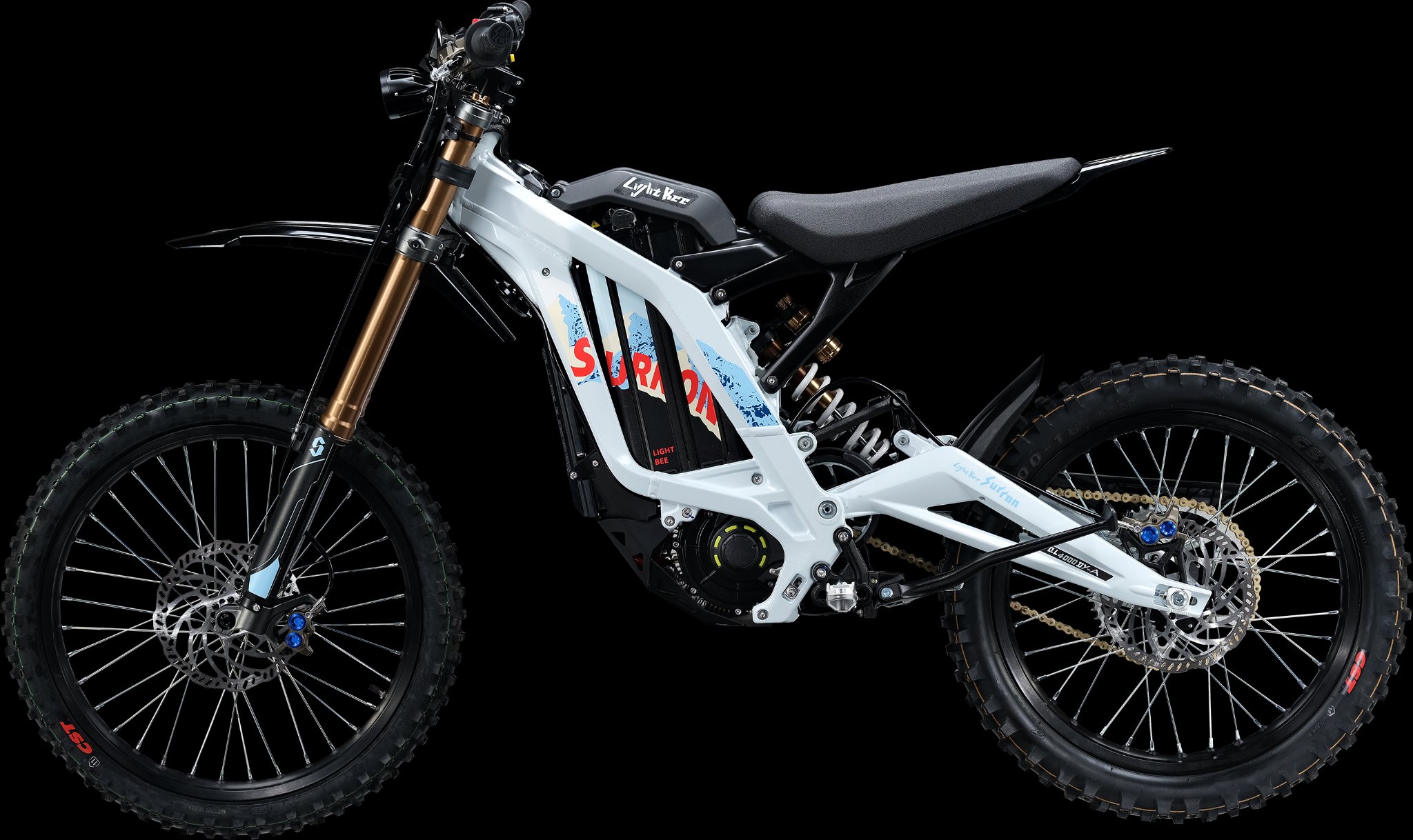
- Light Bee X (2025 and 2026): a compact twist grip with a three-wire hall sensor. The 2026 model runs 72 V, but the throttle still uses a low-voltage 5 V signal from the controller.
- Light Bee 2: a newer platform with more riding modes and traction control, so throttle response is more heavily shaped by software.
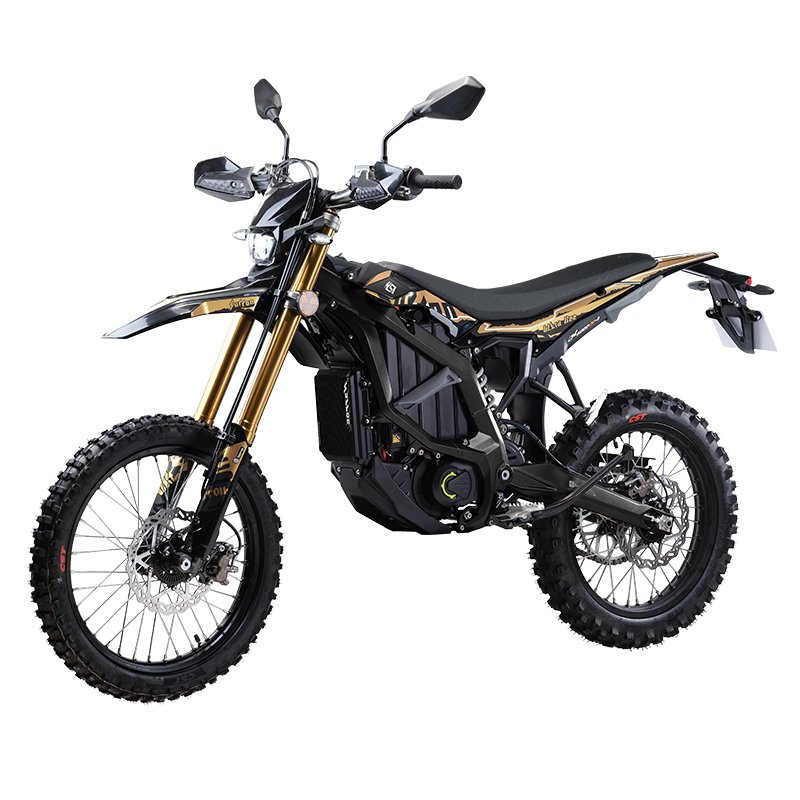
- Ultra Bee and Ultra Bee HP: a larger bike with more torque, so the same wrist movement delivers more drive. Riders often prefer a softer mode for trail riding.
Before ordering parts, confirm your model and year. A Surron throttle from one platform may fit physically on another but use a different plug. If in doubt, send us your VIN and a photo of the connector.
You can read more about each platform in our guides to the Surron Light Bee X and the Surron Ultra Bee.
Safety checks before every ride
Because the Surron throttle controls instant torque, a fault can catch you out quickly. Build these into your pre-ride routine:
- Switch on and twist the grip with the brakes held. It should rotate freely and snap shut.
- Turn the bars lock to lock with the bike on. The display should not flicker and nothing should feel tight.
- Check the kill switch works. Practise reaching it without looking.
- Look at the cable where it passes the steering head for rubbing or pinching.
- After washing, let the bike dry before riding, and keep the pressure washer away from the bars.
These checks take less than a minute and catch most Surron throttle problems before they become a crash.
When to replace rather than repair
Repair makes sense when the problem is a dirty connector, a pinched wire you can splice properly, or a grip that needs cleaning. Replacement makes more sense when:
- The housing is cracked or the grip tube is bent after a crash.
- The hall sensor gives a jumpy or flat reading on the multimeter.
- Water has corroded the sensor inside the housing.
- You have already repaired the cable once and it has failed again.
A new Surron throttle costs far less than a day of fault-finding, and it removes doubt about whether the bike will respond the way you expect. Keep the old unit as a trail-side spare if the housing is intact.
Fitting a new Surron throttle step by step
Fitting a replacement takes about half an hour for most home mechanics. You need hex keys, side cutters, new cable ties and contact cleaner.
- Switch off, remove the key and disconnect the battery if your model allows it.
- Remove the front plastics or headlight surround to reach the connector.
- Cut the cable ties along the bars and frame, noting the routing.
- Unplug the old Surron throttle and loosen the housing clamp.
- Slide the old unit off the bar and fit the new one, leaving a small gap to the grip end.
- Route the cable along the original path, with a gentle loop at the steering head.
- Plug in, reconnect the battery and test with the rear wheel off the ground.
- Turn the bars lock to lock while testing to make sure the cable is not stretched.
- Fit new cable ties and refit the plastics.
If anything feels unusual on the first test, stop and recheck the routing before you ride.
Common mistakes to avoid
These errors cause repeat failures and make a healthy Surron throttle look faulty:
- Over-tight cable ties that crush the wire at the steering head.
- Pressure washing the bars, which drives water into the plug and housing.
- Mixing connectors from different controllers without checking the pin-out.
- Skipping calibration after a controller swap.
- Ignoring a sticky return because it “only happens sometimes”.
Surron throttle parts and support
We keep throttle parts and the related electrical bits in stock in Albert Park and ship Australia-wide. If you are not sure which part you need, check our OEM parts range or contact the workshop with your bike model, year and a photo of the connector. We would rather spend two minutes confirming the right Surron throttle than have you wait for the wrong part.
If your throttle problem turns out to be something bigger, such as a controller or motor fault, our guides on the Surron e bike and common ownership costs cover what to expect next.
Surron throttle FAQs
Can I use any e-bike throttle on a Surron?
Not safely. A Surron throttle must match the controller’s supply voltage, signal range and plug. A cheap e-bike throttle may fit the bar but send the wrong signal, which can cause surging or no response.
Why does my Surron throttle cut out over bumps?
Usually a loose or corroded connector, or a wire that is damaged where it flexes at the steering head. Clean the plug and inspect the cable while turning the bars.
Is the stock Surron throttle waterproof?
It is weather resistant, not waterproof. Riding in rain is normally fine, but pressure washing or submerging the bars can push water into the housing.
How much does a Surron throttle cost?
Our replacement Surron throttle is $60.50 and a thumb throttle for X-9000 controllers is $38.50 as of October 2026.
Do I need to recalibrate after fitting a new throttle?
With the stock controller you usually do not. With many aftermarket controllers you should run the calibration so the controller learns the new range.
Final thoughts
Most Surron throttle problems are simple: a switch, a plug, a pinched cable or a sticky grip. Work through the checks in order, test the sensor if needed, and replace the unit only when the evidence points to it. Keep the connector clean and the routing tidy, and the Surron throttle will give smooth, predictable power for years.
Leave a Reply