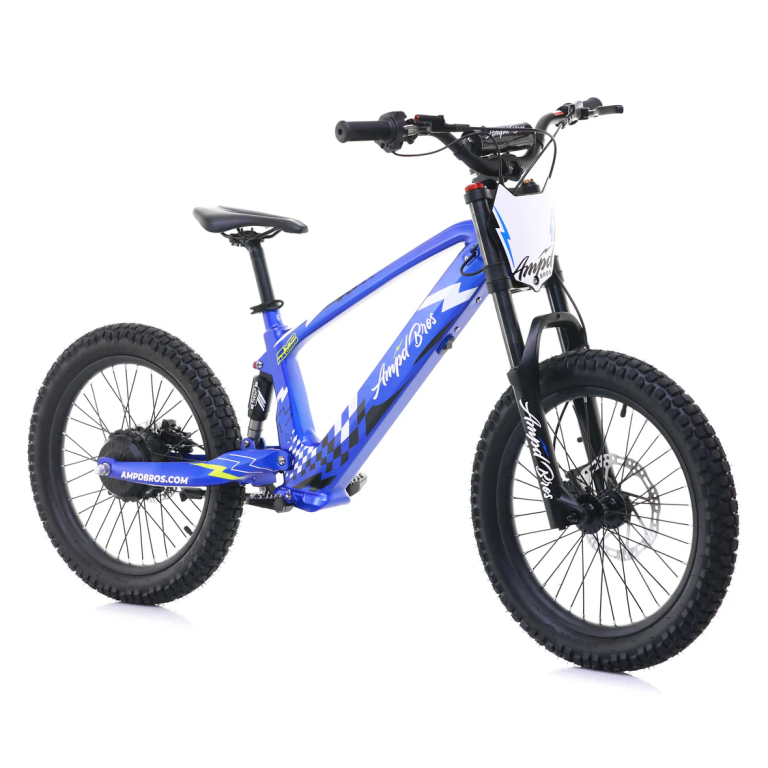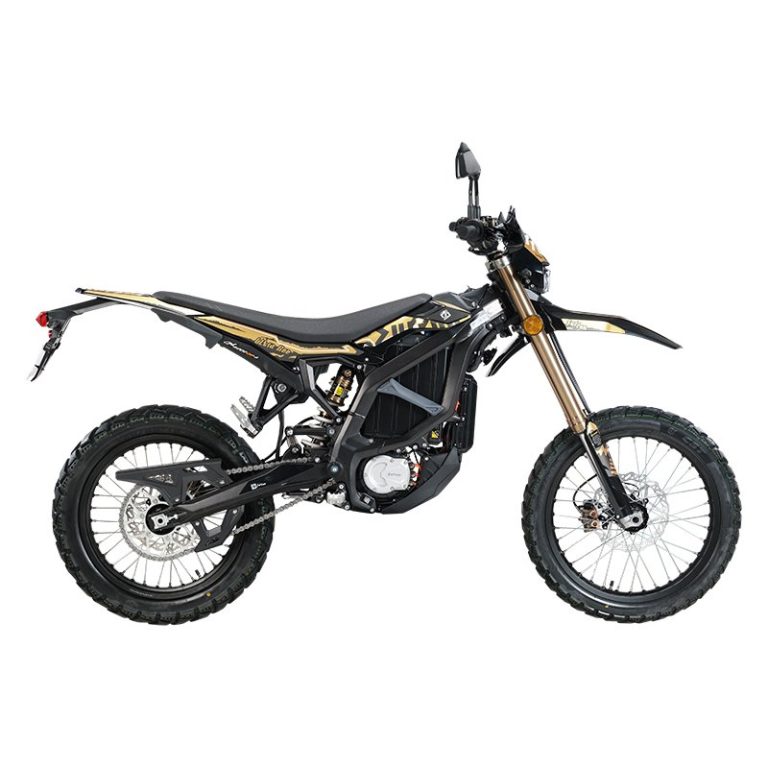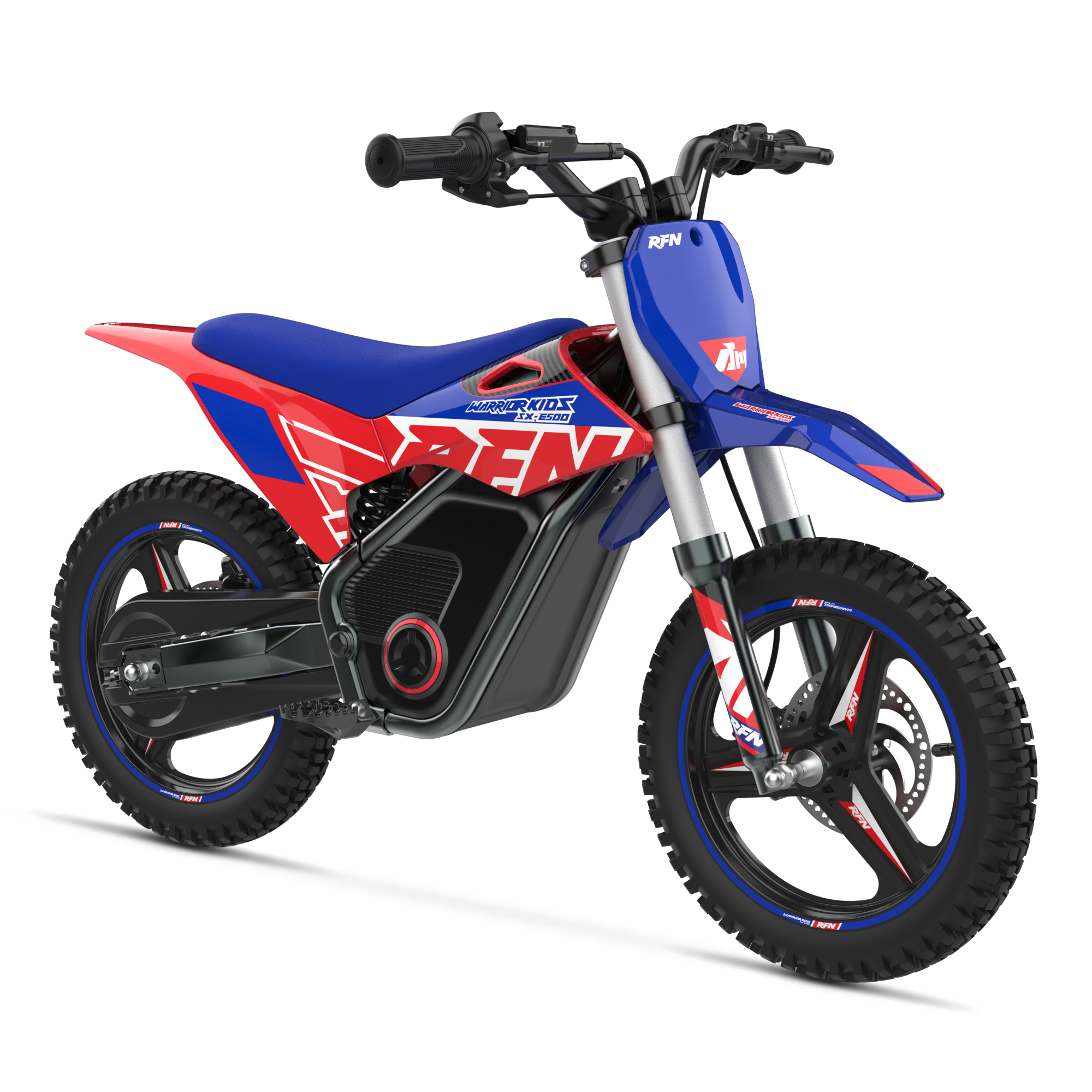
Choosing a kids dirt bike is one of the most exciting purchases a family can make, and one of the most important to get right. The right bike builds confidence, skills and a lifelong love of riding. The wrong one, usually too big or too powerful, can scare a child off riding or lead to injuries. This guide walks Australian parents through everything that matters when buying a kids dirt bike in 2026.
We’ll compare petrol and electric options, explain how to size a bike by age, height and weight, cover the gear your child needs and where they can legally ride, and finish with eight essential tips for finding the best fit. Prices and specs are current as of September 2026.
Why start kids on a dirt bike?
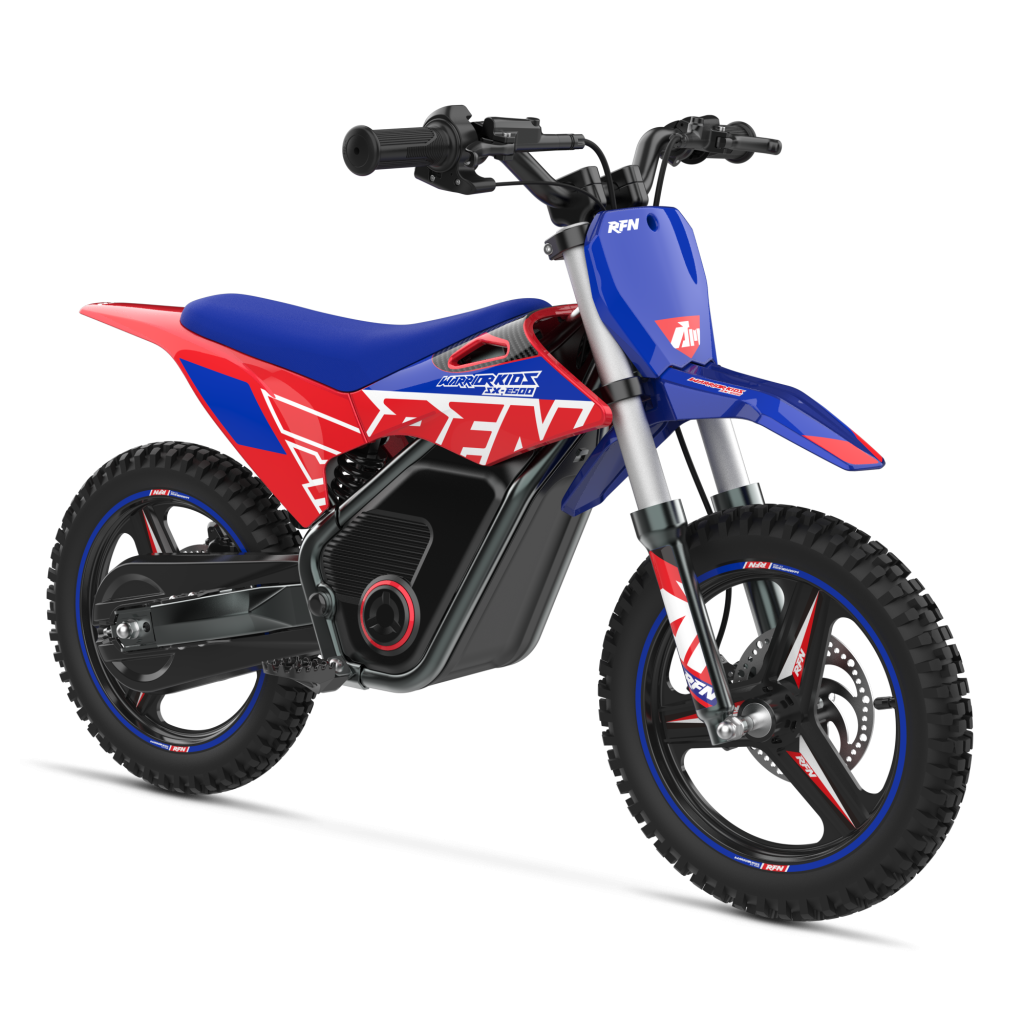
Riding a kids dirt bike teaches far more than how to go fast. Kids learn balance, coordination, spatial awareness and how to judge risk. They learn mechanical sympathy by helping look after the bike. And riding is something the whole family can do together, whether that’s on a rural property, at a junior club or at an off-road park.
Motorcycling Australia runs junior programs for children from age six, and many clubs have dedicated junior days. Starting young, with the right bike and plenty of supervision, gives kids a huge head start.
Petrol or electric kids dirt bike?
Ten years ago, almost every kids dirt bike ran on petrol. Today, electric bikes are often the better choice for beginners, although petrol still has its place.
| Electric kids dirt bike | Petrol kids dirt bike | |
|---|---|---|
| Controls | Throttle and brakes only | Often clutch and gears (automatic on the smallest) |
| Noise | Near silent | Loud |
| Power control | Adjustable modes, some parental controls | Usually one power setting |
| Maintenance | Minimal | Oil, filters, spark plugs, carburettor |
| Running costs | A few dollars per charge | Fuel and servicing |
| Riding time | Limited by battery | Easy to refuel |
| Racing | Limited electric classes | Established junior motocross classes |
For most families riding at home or on a friend’s property, an electric kids dirt bike is simpler, quieter and easier to control. If your child wants to race junior motocross, petrol bikes still dominate the traditional classes, although electric racing is growing.
Kids dirt bike sizes by age
Age is only a rough guide. Height, weight, strength and experience matter more. As a starting point, here’s how different types of bike line up with typical ages.
| Typical age | Type of kids dirt bike | Examples |
|---|---|---|
| 3–8 | Electric balance bikes and very small e-bikes | Kawasaki Elektrode (250 W, ages 3–8) |
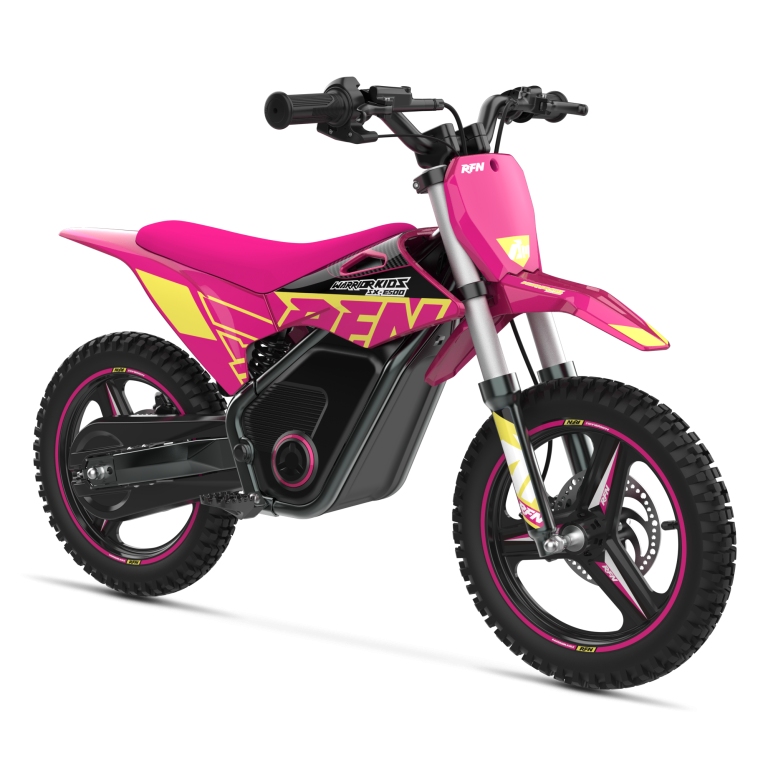
| 5–9 | Small electric bikes, up to 1 kW | RFN Warrior SX-E500, Kayo eKMB |
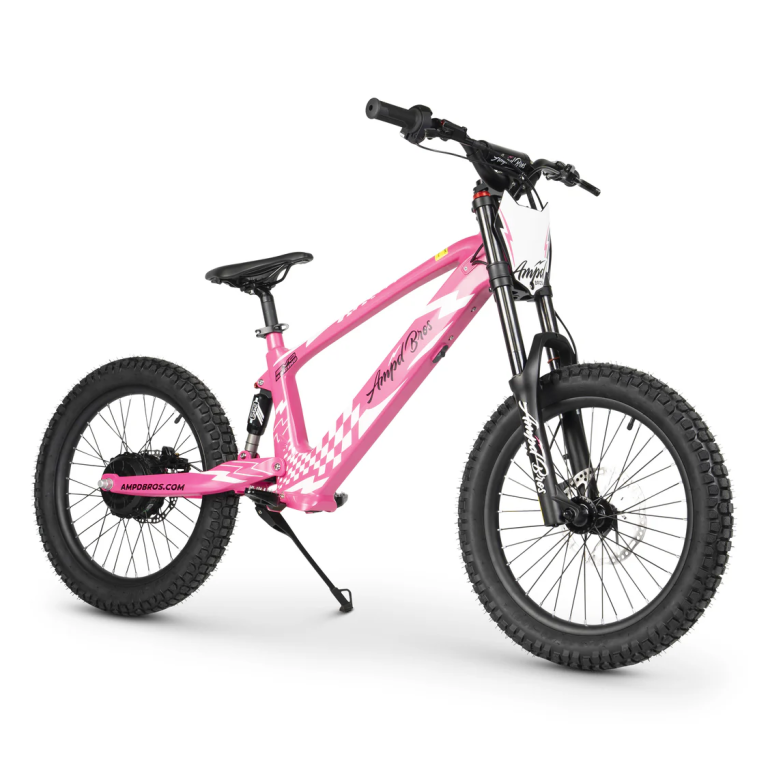
| 7–11 | Larger small bikes, 20-inch wheels or 50cc petrol | RFN EVO Racing 20″, KTM SX-E 2.12 |
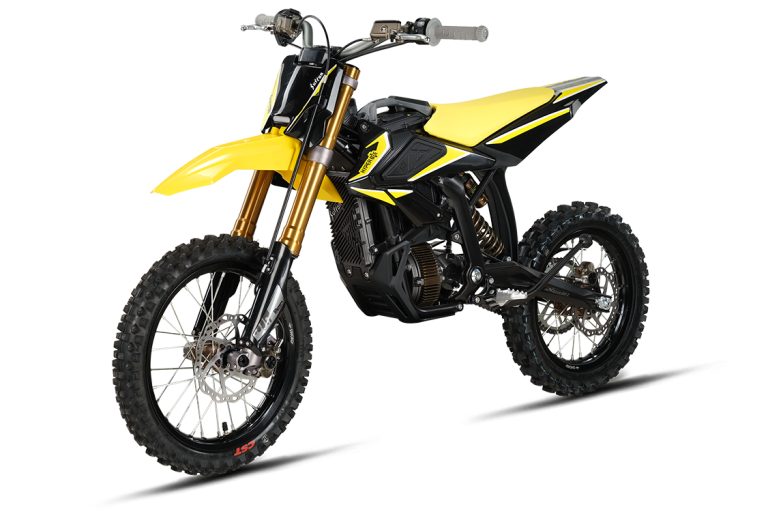
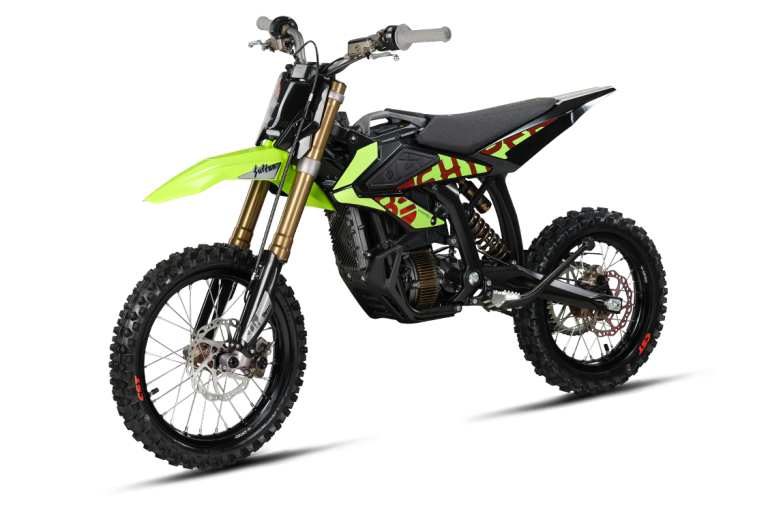
| 8–14 | Powerful mini e-motos | Surron Hyper Bee, KTM SX-E 5 |
| 12+ | Mini and lightweight full-size bikes | E-Ride Pro Mini R, Talaria XXX |
Motorcycling Australia also sets age brackets for petrol motocross classes. For example, bikes up to 50cc are for ages 6 to under 9, and bikes up to 65cc two-stroke or 125cc four-stroke are for ages 7 to under 12. These are competition rules, but they’re a useful benchmark for what’s considered appropriate at each age. You can read the details in Motorcycling Australia’s junior licence conditions.
How to size a kids dirt bike properly
When your child sits on the bike in their riding boots:
- Feet – they should be able to touch the ground with the balls of both feet. Flat-footed is even better for beginners.
- Reach – they should reach the handlebars with slightly bent elbows and comfortably pull the brake levers.
- Weight – they should be able to hold the bike upright and, ideally, pick it up after a fall.
- Rider weight limit – they must be under the bike’s maximum load. The Surron Hyper Bee, for example, has a 55 kg maximum.
If you’re between sizes, choose the smaller kids dirt bike. A child who feels in control will learn faster and safer than one struggling with a bike that’s too big.
8 essential tips for choosing a kids dirt bike
1. Size for today, not for growth
It’s tempting to buy a bigger bike your child will “grow into”. Resist it. An oversized kids dirt bike is harder to control, harder to pick up and more intimidating. Buy the right size now and trade up later.
2. Choose adjustable power
Look for speed modes or parental controls. The RFN EVO Racing 20″ and Warrior SX-E500 have three speed modes, from 15 km/h up to 35 km/h. The Surron Hyper Bee adds app controls, a remote cut-out and a magnetic kill switch.
3. Prioritise good brakes
Hydraulic disc brakes are easier for small hands to use and stop more reliably. Both RFN models we stock have hydraulic disc brakes.
4. Think about weight
Lighter is better. A kids dirt bike your child can pick up on their own builds independence and confidence.
5. Check the battery or fuel practicalities
For electric bikes, check run time and charging time. For petrol, think about fuel storage and servicing.
6. Consider noise
If you ride at home or near neighbours, an electric kids dirt bike avoids complaints that can end home riding altogether.
7. Buy from someone who stocks parts
Kids crash, and every kids dirt bike will need new levers, grips, pegs or plastics eventually. Buy from a dealer with parts available.
8. Budget for gear
A helmet, goggles, gloves, boots and body armour are essential and not optional. Plan the gear budget before you buy the bike.
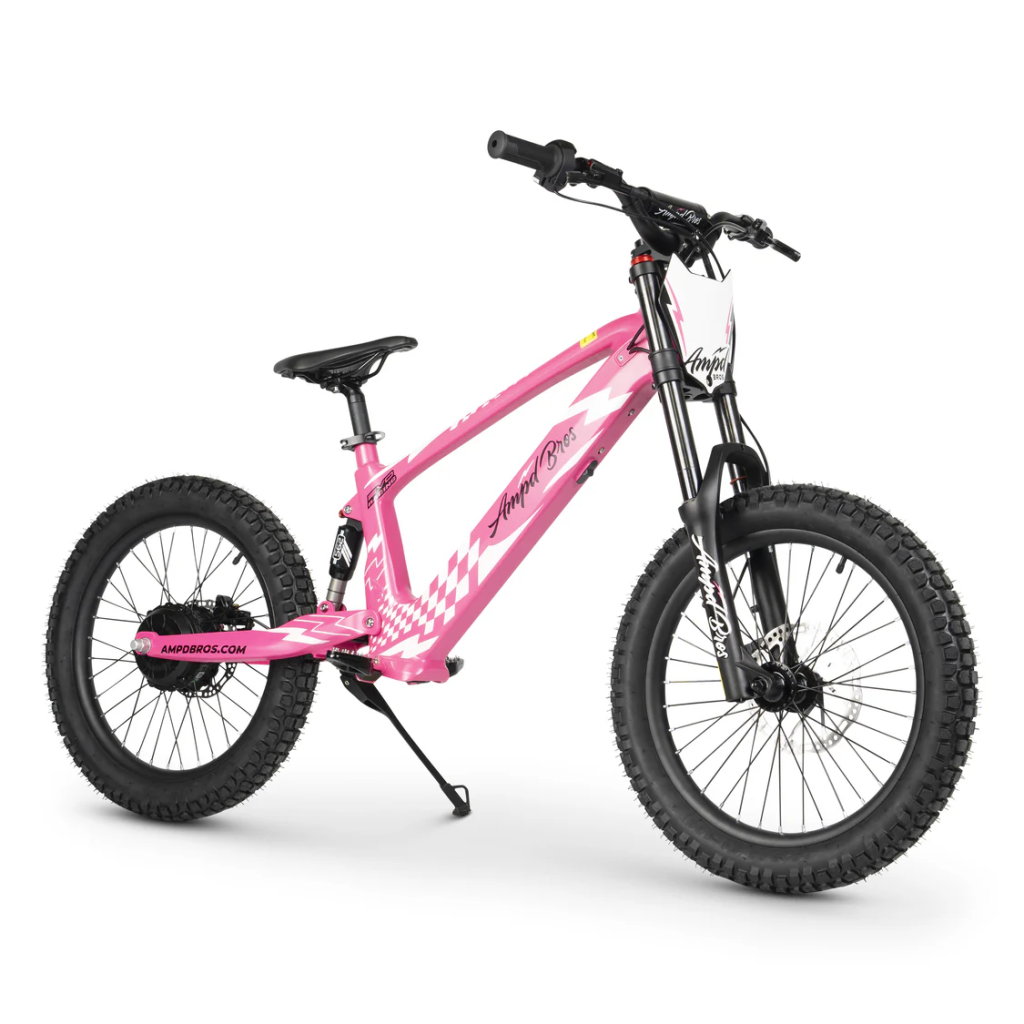
The best kids dirt bike options we stock
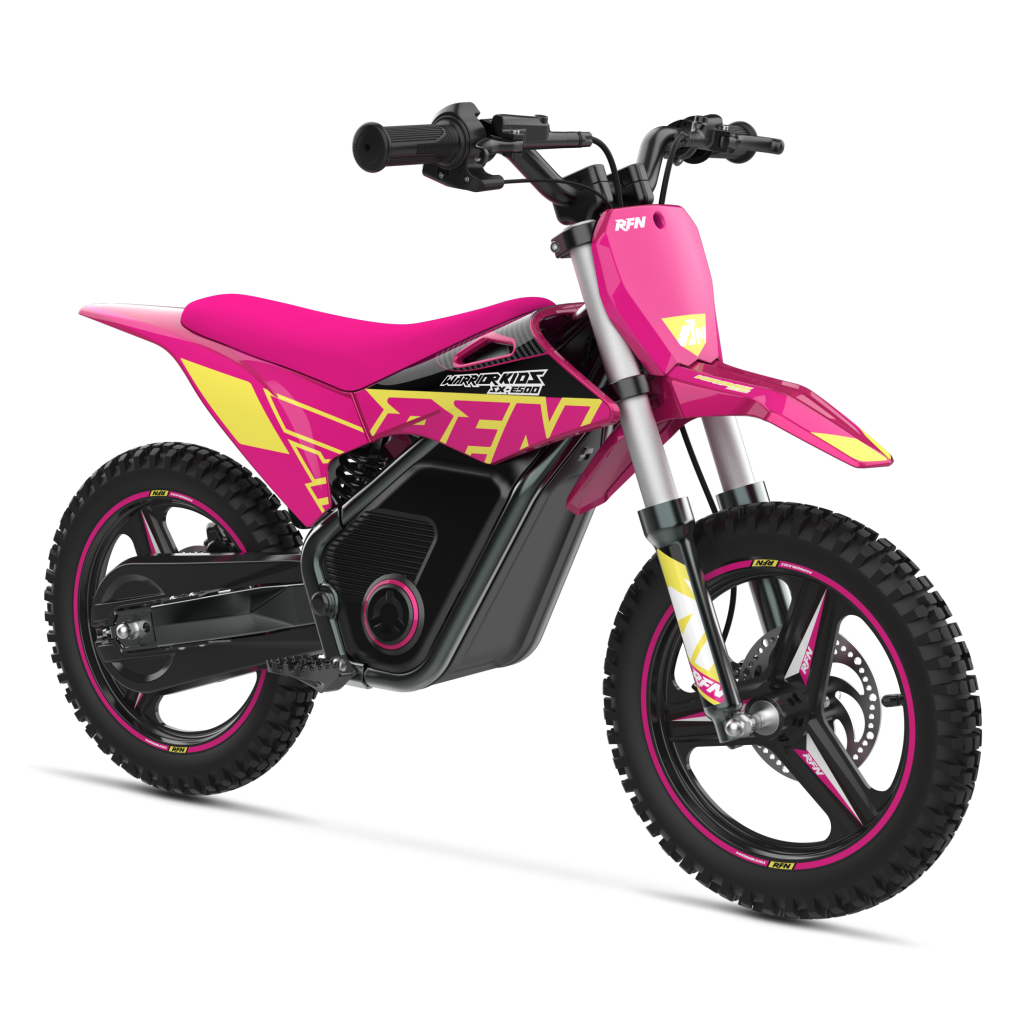
RFN Warrior SX-E500
A great first bike for younger riders. It has a 36V 500W brushless motor, three speed modes (15, 25 and 35 km/h), 14-inch wheels, dual suspension, hydraulic disc brakes and a removable battery with up to about 1 hour 15 minutes of run time on the lowest setting. See the RFN Warrior SX-E500.
RFN EVO Racing 20″
The next step up, with a 750 W motor, 20-inch wheels, an aluminium frame and the same three speed modes. It’s recommended for kids from about 7–8 years old. See the RFN EVO Racing 20″.
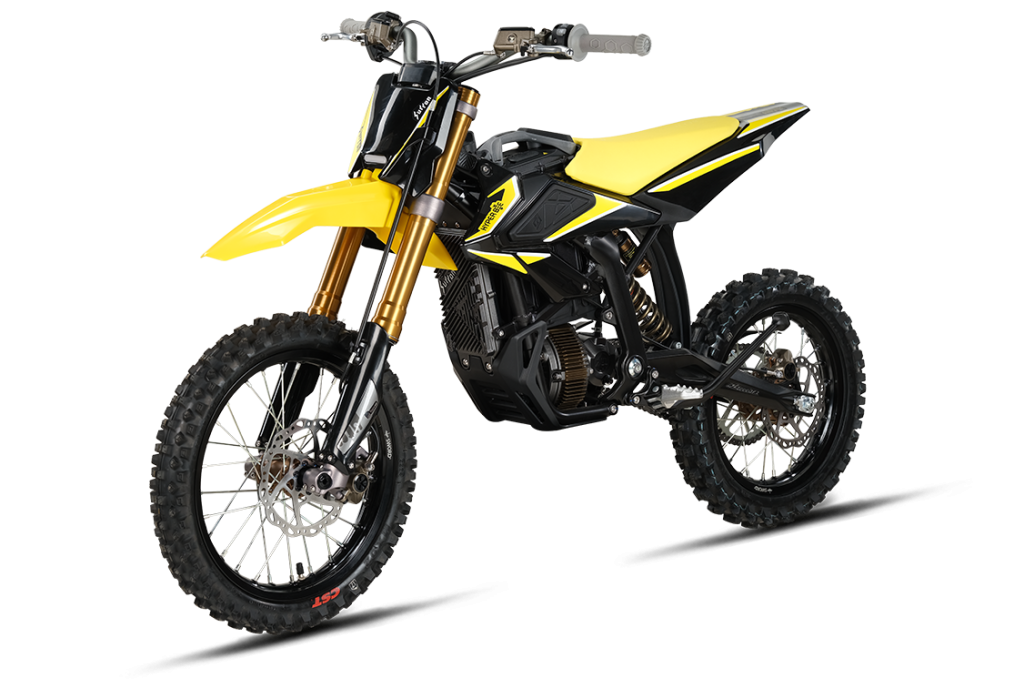
Surron Hyper Bee
A serious mini e-moto for kids and small teens up to 55 kg, with 8 kW peak power, a 65 km/h top speed, anti-wheelie control and parental controls. Our Surron Hyper Bee guide covers it in detail.
E-Ride Pro Mini R
For slightly bigger riders up to 64.8 kg, the Mini R has 8 kW peak, 230 Nm, a 678 mm seat height and a 48.5 kg kerb weight. See the E-Ride Pro Mini R.
Where can kids ride a dirt bike legally?
This is one of the most important things for parents to understand. An unregistered kids dirt bike can only be ridden:
- on private property, with the landowner’s permission,
- at club tracks, usually with club membership and a junior licence,
- at approved off-road parks, which have their own age and supervision rules.
Kids can’t ride on roads, footpaths, bike paths, parks, beaches, or in state forests and national parks. In Victoria, minibikes are specifically for riders under 12 on private property or club tracks only. In Western Australia, no one under 8 may be in charge of a vehicle in an off-road area, and some areas, like Lancelin, require adult supervision for everyone under 16.
Several states introduced bigger fines in 2026, and in Queensland parents can be fined for letting children ride non-compliant devices in public. Our electric dirt bike laws guide covers the rules state by state.
Gear every child needs
- Helmet – a properly fitted motocross helmet that meets a recognised standard such as AS/NZS 1698 or ECE 22.05/22.06. Many tracks require AS/NZS 1698.
- Goggles – to protect eyes from dirt, stones and branches.
- Gloves – for grip and protection.
- Boots – proper motocross boots that protect ankles and shins.
- Body armour – a chest protector and knee and elbow guards.
- Riding clothes – long sleeves and long pants or a jersey and riding pants.
Kids grow quickly, so check the fit of their helmet and boots every few months. Our dirt bike gear guide explains what to look for.
Supervision and safety
Children on motorbikes need to be supervised at all times. According to the Sydney Children’s Hospitals Network, motorcycles are involved in the majority of off-road vehicle injuries to children admitted to NSW hospitals, and its off-road vehicle safety advice is worth reading for every parent.
Practical rules that help:
- An adult watches every ride, especially in the first months.
- Riding happens in a set area with clear boundaries.
- Kids ride one at a time until they’re experienced.
- Power stays in the lowest mode until skills are solid.
- Full gear is worn every time, no exceptions.
Teaching your child to ride
- Start on flat, open grass or dirt.
- Practise stopping with both brakes until it’s automatic.
- Teach smooth throttle control, rolling on gently.
- Introduce wide turns, then figure eights.
- Teach standing on the pegs with knees bent.
- Only move to trails once they can stop quickly and control speed.
Keep sessions short and fun, and consider a junior coaching day with a qualified coach.
Setting up a safe riding area at home
If you have space on a rural property, a simple home track is the best place for a child to learn. A good learning area has:
- Flat, open ground with soft grass or dirt, and no rocks, stumps or holes.
- Clear boundaries marked with cones, tyres or a fence, so your child knows exactly where they can ride.
- No hazards nearby such as dams, sheds, vehicles, livestock, driveways or roads.
- A simple loop with wide turns to start, and later a few gentle rises and a figure-eight section.
- A spot for the supervising adult with a clear view of the whole area.
Keep the area away from neighbours’ boundaries, even with a quiet electric bike, and check your council has no local restrictions on recreational riding.
Junior clubs and coaching
Once your child has the basics, a junior club is the next step. Clubs affiliated with Motorcycling Australia run practice days and junior events on purpose-built tracks, with rules about age, bike size and supervision. Most require a junior licence and a helmet that meets the track’s standard. Riding at a club introduces kids to other young riders, structured coaching and track etiquette, and gives parents a safe place to ride that isn’t the back paddock.
Coaching is worth every dollar. A qualified coach spots bad habits early, like sitting down over bumps or grabbing the front brake, and teaches skills in a logical order.
Common mistakes parents make
We see the same mistakes again and again, and they’re all avoidable.
- Buying too big. It’s the most common mistake by far, and the one most likely to scare a child off riding.
- Unlocking full power too soon. Kids progress fastest when they master control before speed.
- Skimping on gear. A cheap, poorly fitting helmet or runners instead of boots is not good enough.
- Riding unsupervised. Even experienced kids need an adult watching.
- Riding in public places. Parks, streets and footpaths are illegal and dangerous places to ride, and fines are rising.
- Ignoring maintenance. Loose chains, worn brake pads and low tyres cause crashes.
Buying a second-hand bike
Used kids’ bikes can be good value because children outgrow them quickly. Check the brakes, tyres, chain and suspension, make sure all speed modes and safety features work, and for electric bikes, ask about the battery’s age and how it has been stored. Ask for proof of purchase, and walk away if the seller can’t provide it.
How much does a kids dirt bike cost?
| Type | Typical price (approx.) |
|---|---|
| Small electric kids’ bike | Under $2,500 |
| Premium small electric (e.g. KTM SX-E 2.12) | About $3,900 |
| Petrol pit bike (e.g. Kayo TT125) | About $1,700–$1,850 |
| Powerful mini e-moto (e.g. Surron Hyper Bee) | About $4,490 |
| Race-focused mini (e.g. KTM SX-E 5) | About $10,000 |
Add $600 to $1,500 for gear, plus a way to transport the bike.
Looking after a kids dirt bike
- Check tyre pressures, brakes and chain before every ride.
- Charge electric bikes after riding, but don’t leave them on the charger for days.
- Store batteries at around half charge if the bike won’t be used for a while.
- Clean the bike gently, without pressure-washing electrical parts.
- Get your child involved. Learning to care for the bike builds responsibility.
Transporting a kids dirt bike
Most small bikes fit easily in the back of a wagon or ute, and many parents can lift them in alone. For larger bikes, a small trailer or tow-bar carrier is easier on your back. Always strap the kids dirt bike down by the handlebars with soft ties, use a wheel chock, and never transport an electric bike with a damaged battery. Take the charger with you if you’ll be riding for the day.
Making riding a family activity
The best thing about a kids dirt bike is that it gets the whole family outdoors together. Many parents buy a bike for themselves as well, so they can ride alongside their children, model good habits and share the fun. Plan regular riding days, keep them short enough that everyone finishes wanting more, and celebrate small wins like a first figure-eight or a clean stop.
Involve your child in the jobs around riding too: checking tyre pressures, charging the battery, cleaning the bike and packing the gear bag. Kids who help look after their kids dirt bike tend to ride it more carefully and value it more.
When to move up a size
Signs your child is ready for a bigger kids dirt bike:
- their knees are high and cramped when seated,
- they’re consistently in the top speed mode and still wanting more,
- they’re close to the bike’s weight limit,
- they’re riding confidently on trails and controlling speed well.
Move up one step at a time, and keep the new bike in its lowest mode at first.
Buying a kids dirt bike from Electric Dirt Bikes
We stock kids’ electric dirt bikes from RFN, Surron and E-Ride Pro, plus parts and advice, from our locations in Albert Park, Victoria, and Rosny Park, Tasmania. Contact us with your child’s age, height, weight and experience and we’ll recommend the right size. Browse our full range of electric bikes and e-motos.
Kids dirt bike FAQs
What age can a child start riding a dirt bike?
Many children start on electric balance bikes from around 3. Motorcycling Australia junior licences start from age 6. Always match the bike to the child’s size and ability.
What size kids dirt bike does my child need?
Your child should touch the ground with the balls of both feet, reach the controls comfortably and be under the bike’s weight limit.
Is an electric kids dirt bike safer than petrol?
Electric bikes are easier to control for beginners because there’s no clutch or gears and power can be limited. Supervision and gear matter more than the type of bike.
Where can my child ride a kids dirt bike?
On private property with permission, at club tracks and at approved off-road parks. Not on roads, footpaths or public land.
How fast does a kids dirt bike go?
It varies. Small electric bikes like the RFN models have speed modes from 15 to 35 km/h, while the Surron Hyper Bee reaches 65 km/h.