A kids electric motorbike is one of the best ways to introduce a child to riding. It’s quiet, easy to start, simple to maintain and adjustable as skills grow. But the right bike for a four-year-old is very different from the right bike for a twelve-year-old, and buying too big too soon is the most common mistake parents make.
This guide breaks riding into five proven stages, from the first balance bike to a powerful mini e-moto. For each stage, we explain typical ages, the skills to master, the best bikes and the signs your child is ready to move up. Specs and prices are current as of September 2026.
Why progress in stages?
Children learn best in small, confident steps. A bike that matches their size and skill lets them master the basics without fear. A bike that’s too big or too fast does the opposite: it’s harder to control, more likely to cause crashes and can put a child off riding for good.
Staging also helps you plan a budget over several years instead of making one big, risky decision at the start. It makes buying easier too. Instead of guessing which kids electric motorbike your child will “grow into”, you buy the right bike for now and move up when the skills are there. Good bikes hold their value, so selling or handing down a smaller bike helps fund the next one.
The five stages at a glance
| Stage | Typical age | Motor power | Example bikes |
|---|---|---|---|
| 1. Balance and throttle | 3–5 | About 250 W | Kawasaki Elektrode |
| 2. First motorbike | 5–8 | 350–500 W | RFN Warrior SX-E500, Kayo eKMB |
| 3. Step-up bike | 7–11 | 750 W–1.8 kW | RFN EVO Racing 20″, KTM SX-E 2.12 |
| 4. Mini e-moto | 8–14 | 5–8 kW | Surron Hyper Bee, KTM SX-E 5 |
| 5. Bigger kids and teens | 12+ | About 8 kW and up | E-Ride Pro Mini R, Light Bee X |
Ages are only a guide. Size, confidence and experience matter far more than a birthday.
Stage 1: Balance and throttle (ages 3–5)
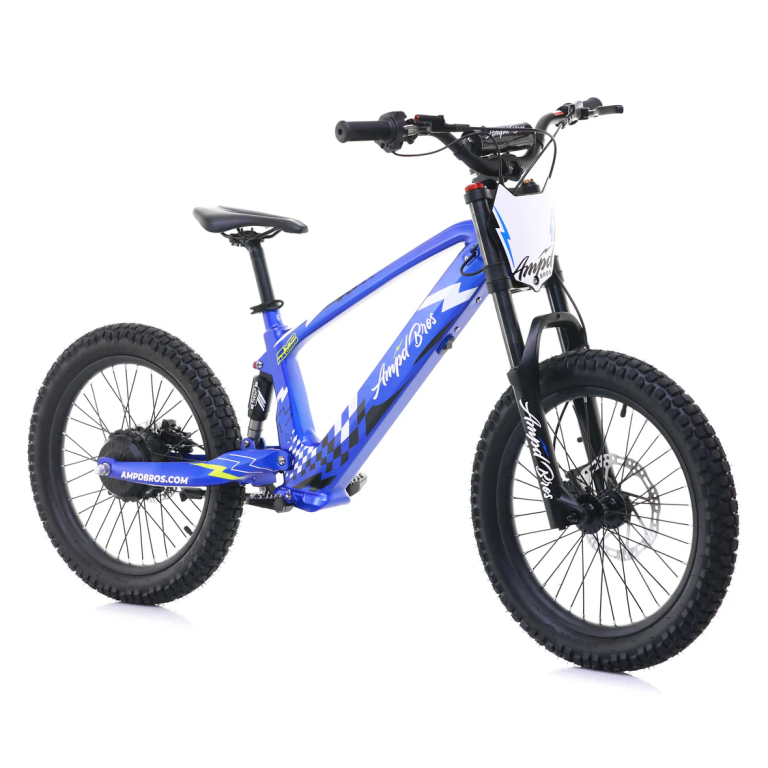
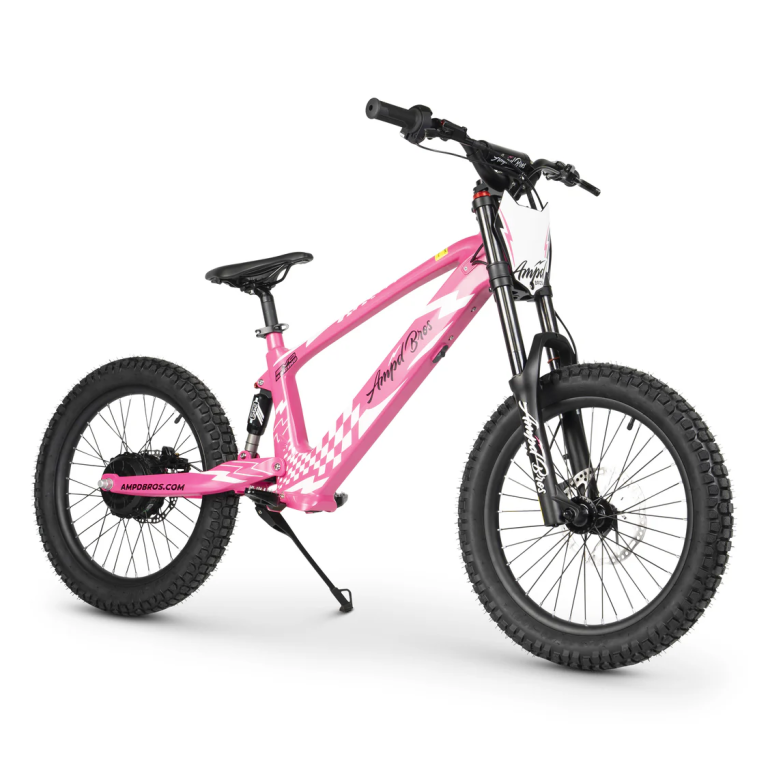
The first stage isn’t really about speed at all. It’s about balance, steering and learning that a small twist of the wrist makes the bike move. An electric balance bike is perfect here. It’s the simplest kids electric motorbike you can buy: low, light and slow, and many have a no-power mode so a child can scoot along with their feet first.
The Kawasaki Elektrode, with a 250 W motor, is a good example. It’s designed for kids aged about 3 to 8 and is one of the gentlest introductions to powered riding. See Kawasaki Australia’s Elektrode page for details.
Skills to master at stage 1
- Balancing and gliding with feet up.
- Smooth throttle control at walking pace.
- Braking to a stop on command.
- Looking ahead, not down at the front wheel.
Ready to move up when…
Your child can ride a pedal bike or balance bike confidently, stop reliably and follow simple instructions. Most kids reach this point between four and six.
Stage 2: The first kids electric motorbike (ages 5–8)
Stage two is the first proper kids electric motorbike, with dirt bike styling, suspension and real brakes. Motors are usually 350 to 500 W, and speed modes let parents start slow.
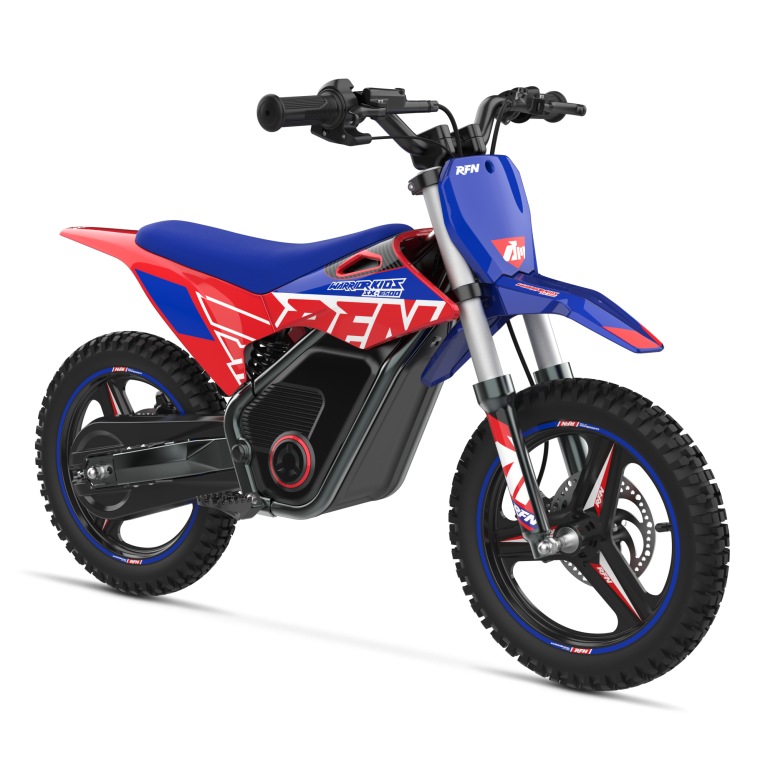
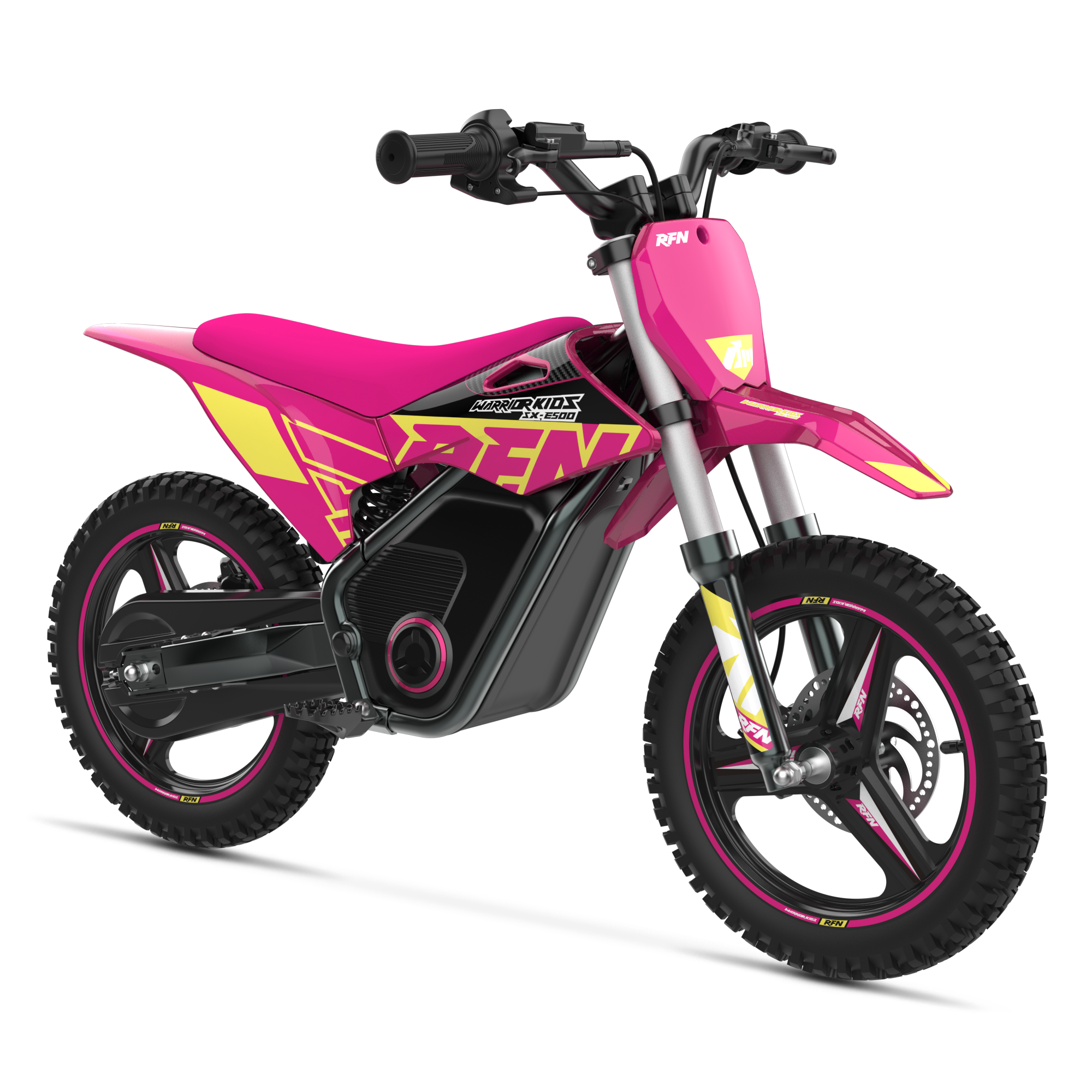
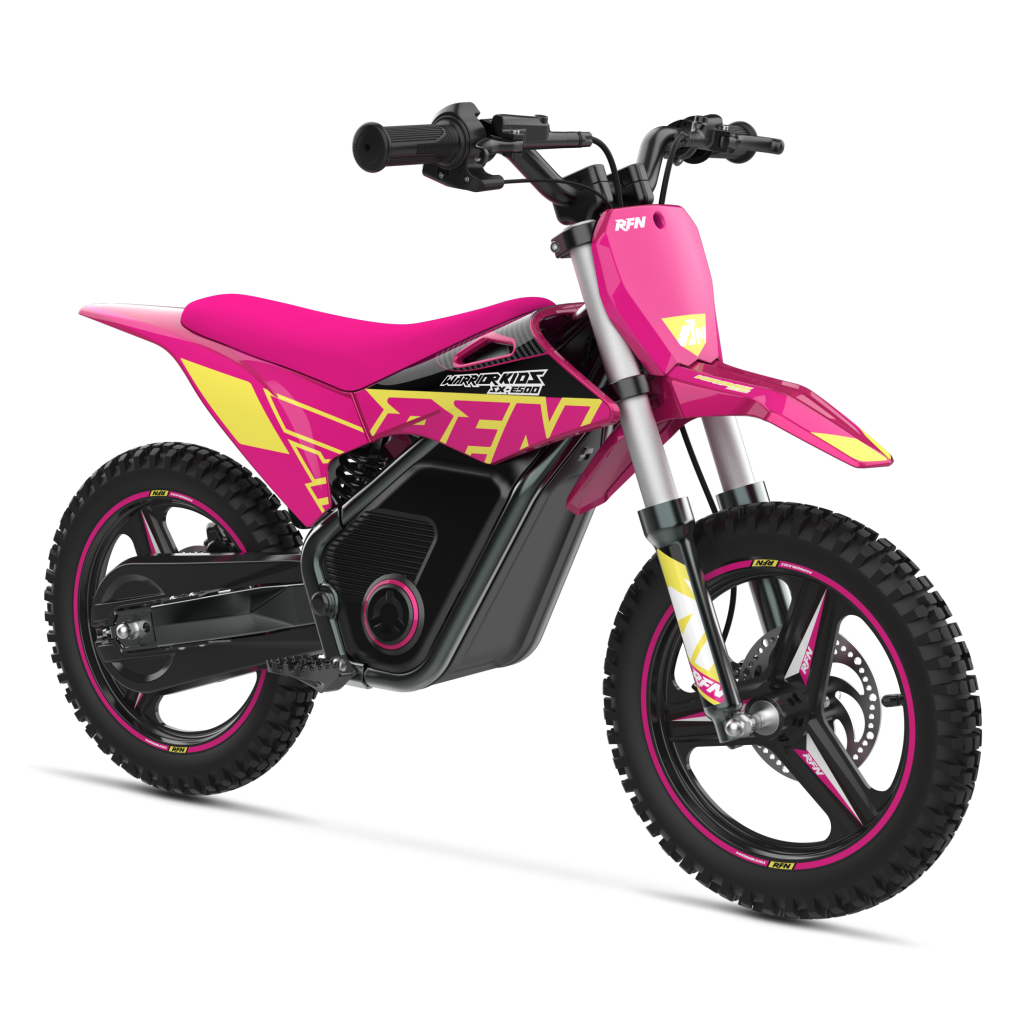
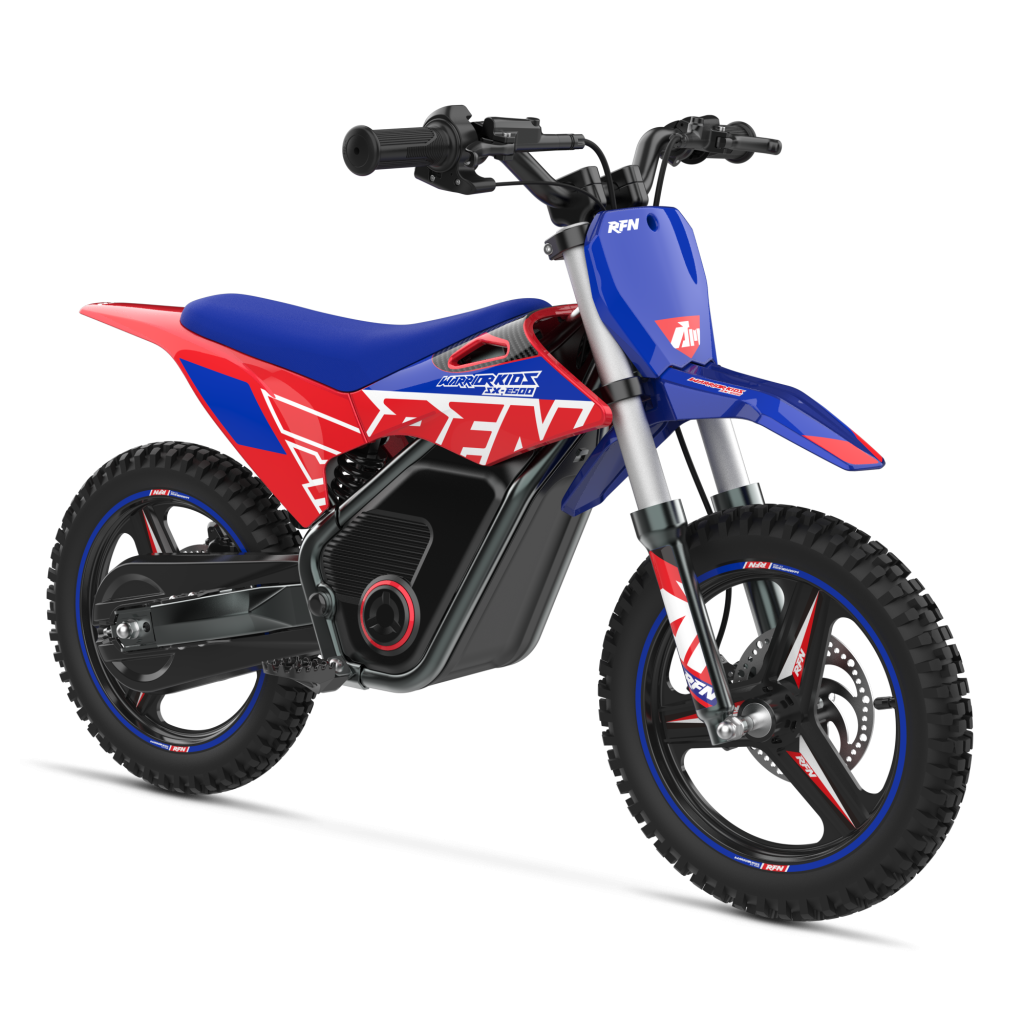
The RFN Warrior SX-E500 is our favourite here. It has a 36V 500 W brushless motor, three speed modes (15, 25 and 35 km/h), 14-inch wheels, dual suspension, hydraulic disc brakes and a swappable 36V 7.5Ah battery with up to about 1 hour 15 minutes of run time on the lowest setting. Kayo’s eKMB, with a 350 W rated motor and a 25 km/h top speed, is another light option. Our Kayo dirt bike guide covers it.
Skills to master at stage 2
- Starting and stopping smoothly with both brakes.
- Turning in both directions and riding simple loops.
- Standing on the pegs over bumps.
- Riding at a steady speed in the lowest mode.
Ready to move up when…
Your child rides confidently in the top speed mode, handles bumps standing up and has started to feel cramped on the bike. Knees hitting the bars is a clear sign.
Stage 3: The step-up bike (ages 7–11)
The third stage brings bigger wheels, more power and better suspension. This is where a kids electric motorbike starts to feel like a real dirt bike, and where kids begin to ride small jumps and more varied terrain.
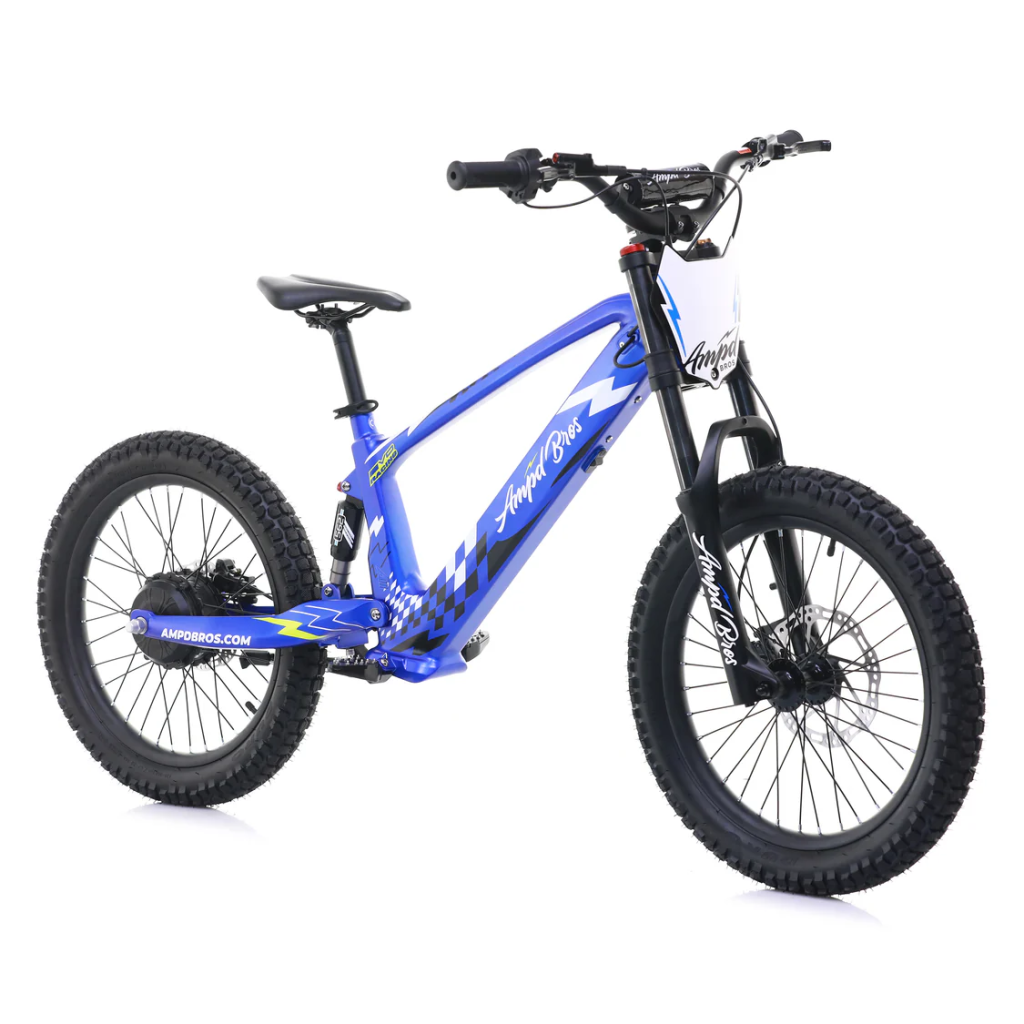
The RFN EVO Racing 20″ is the natural next step after the Warrior. It has a 750 W motor, 20-inch wheels, an aluminium frame, dual suspension, hydraulic brakes and the same three speed modes, and it’s recommended for kids from about 7–8 years old. The KTM SX-E 2.12, with 1.8 kW, is a premium alternative for around $3,895.
Skills to master at stage 3
- Standing and cornering with good body position.
- Riding over small obstacles, ruts and roots.
- Controlled braking on loose surfaces.
- Small jumps with the wheels landing together.
Ready to move up when…
Your child rides the step-up bike smoothly at full power, has good body position and has outgrown it physically. Some kids stay at this stage for years, and that’s perfectly fine.
Stage 4: The mini e-moto (ages 8–14)
Stage four is a big jump. A mini e-moto is the most powerful kids electric motorbike most families will buy, making several kilowatts and reaching speeds that demand real skill and full protective gear. They’re for experienced riders only, not for beginners who happen to be the right size.
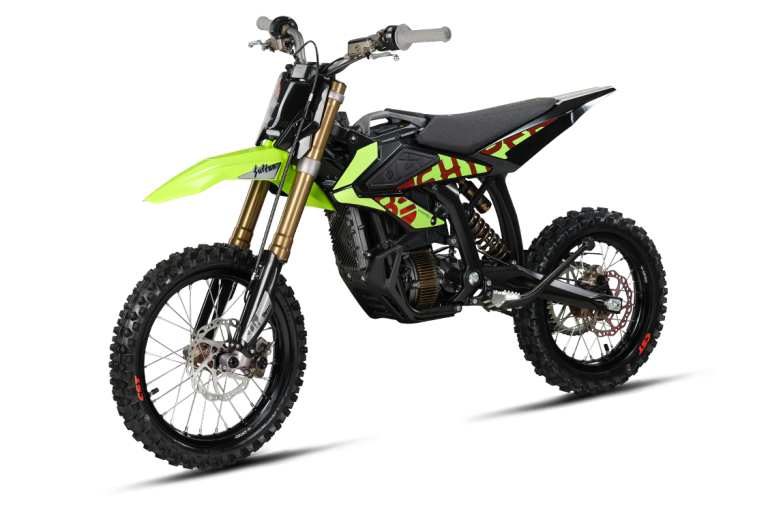
The Surron Hyper Bee is a standout. The 2026 model has an 8 kW peak, a 65 km/h top speed, a 39 kg kerb weight and a 55 kg maximum rider load. It also has excellent parental controls, including GPS tracking, a remote cut-out, a magnetic kill switch and anti-wheelie control. The KTM SX-E 5 is a race-focused option at around $10,000. Read our Hyper Bee guide for more.
Skills to master at stage 4
- Throttle control with much more power on tap.
- Braking hard from higher speeds.
- Reading the terrain ahead and choosing lines.
- Riding safely with other riders around.
Ready to move up when…
Your rider is nearing the weight limit, rides the bike at full power with control and has good track sense. Coaching at this stage makes a real difference.
Stage 5: Bigger kids and teens (12+)
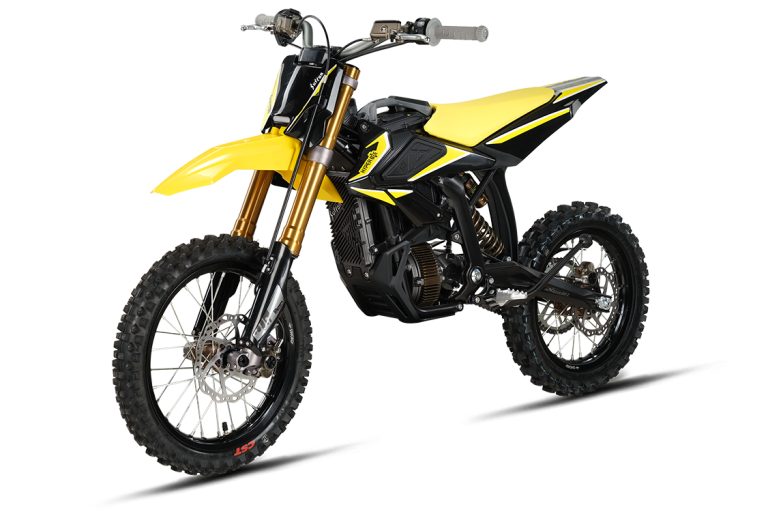
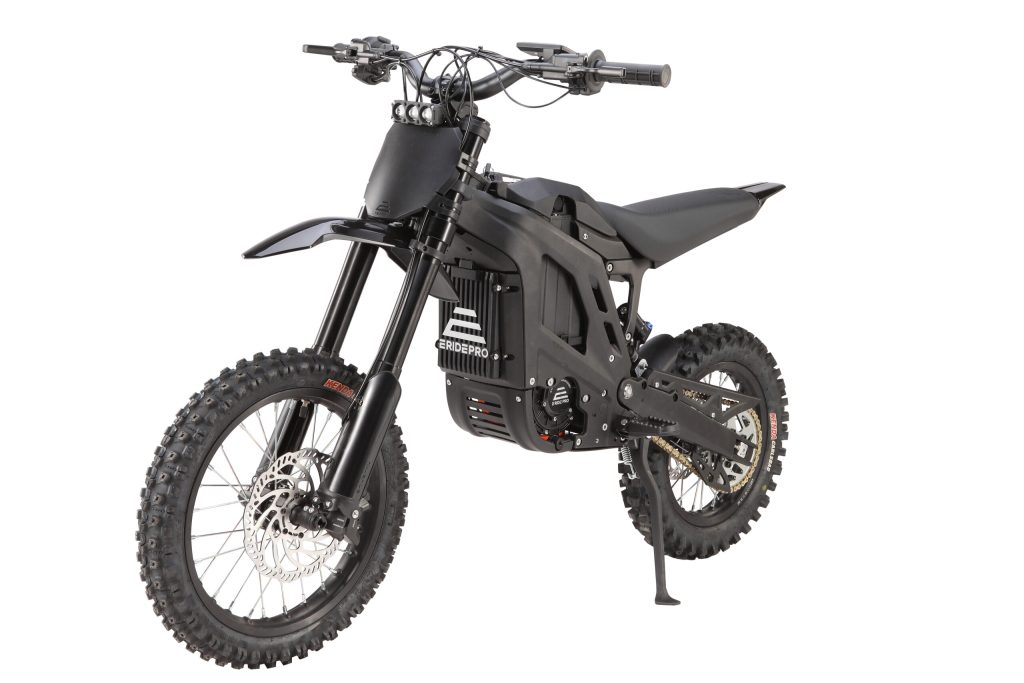
The final stage covers bigger kids and small teens who have outgrown a mini kids electric motorbike but aren’t ready for a full-size adult bike. The E-Ride Pro Mini R fills this gap. It suits riders up to 64.8 kg, with 8 kW peak, 230 Nm, a 70 km/h top speed, a 678 mm seat height and a 48.5 kg kerb weight.
From there, many teens move to a lightweight e-moto like the Light Bee X. Read our 2026 Light Bee X review when your teen is ready for that step.
How to choose the right kids electric motorbike
Within each stage, a few simple checks will help you choose.
- Fit: your child should be able to touch the ground with the balls of both feet and reach the bars comfortably.
- Weight: a light bike is easier to pick up after a fall and less tiring to ride.
- Speed modes: multiple modes let you start slow and increase power as skills grow.
- Parental controls: remote cut-outs, app limits and kill switches add peace of mind.
- Battery: check run time and charge time, and choose a reputable brand with a proper battery management system.
- Brakes and suspension: hydraulic brakes and adjustable suspension make a real difference.
Our kids electric dirt bike guide compares the best models in more detail.
Gear for every stage
Every kids electric motorbike needs protective gear, from the very first ride. The minimum is a properly fitted, certified helmet, goggles, gloves, long pants, long sleeves and sturdy boots that cover the ankles. As speed increases, add motocross boots, knee guards, elbow guards and a chest protector or body armour.
Buy gear that fits now rather than gear to grow into, just as you would with the kids electric motorbike itself. A loose helmet or oversized boots can be dangerous. Our dirt bike gear checklist lists what to buy for every age.
Where can kids ride?
A kids electric motorbike is an unregistered motor vehicle. That means it can only be ridden on private property with permission, at club tracks and at approved off-road parks. Kids can’t ride on streets, footpaths, parks or beaches. Some areas set minimum ages and supervision rules, so always check before you go.
Our electric dirt bike for kids guide covers safety and legal rules in more depth, and our electric dirt bike laws guide explains each state.
Coaching and clubs
Coaching is one of the best investments you can make at any stage. Qualified coaches teach body position, braking and cornering, and correct bad habits early. Motorcycling Australia’s Junior Coaching Program is designed for young riders, and many local clubs run junior days.
Clubs also give kids a safe, supervised place to ride their kids electric motorbike with others their age. Many now welcome electric bikes alongside petrol ones.
What each stage costs
| Stage | Approx. bike price | Gear budget |
|---|---|---|
| 1. Balance and throttle | Under $1,500 | $300–$500 |
| 2. First motorbike | Under $2,500 | $400–$800 |
| 3. Step-up bike | $2,500–$4,000 | $500–$1,000 |
| 4. Mini e-moto | About $4,490 to $10,000 | $800–$1,500 |
| 5. Bigger kids and teens | Check our store | $800–$1,500 |
Prices vary by brand and change often, so treat these as a guide. Buying good-quality bikes that hold their value makes each step up cheaper.
Charging and battery safety
Batteries are the heart of every kids electric motorbike, so treat them with care. Charge in a garage, shed or carport rather than a bedroom, use the charger supplied with the bike and never leave a battery charging unattended overnight. Don’t charge a battery that’s damaged, swollen, wet or smells unusual.
For storage, keep batteries at around half charge in a cool, dry place. Good habits make batteries last longer and keep your family safe.
Common mistakes parents make
Most problems we see come from a handful of avoidable mistakes:
- Buying too big. A kids electric motorbike that’s too tall or heavy is hard to control and easy to drop.
- Skipping stages. Jumping from a first bike straight to a mini e-moto leaves big gaps in skill.
- Unlocking full power too soon. Keep the bike in its lowest mode until your child is truly confident.
- Riding in the wrong places. Streets, footpaths and parks are off-limits and put kids at risk.
- Cheap, unknown batteries. Poor-quality batteries and chargers are a fire risk and wear out fast.
- Incomplete gear. A helmet alone isn’t enough once speeds increase.
Avoid these and your child’s first kids electric motorbike will be the start of a safe, lifelong hobby.
Parent tips for a great start
- Ride together, or walk alongside, for the first few sessions.
- Set clear boundaries for where the bike can go.
- Keep sessions short and fun, and stop before your child gets tired.
- Praise effort and good technique, not speed.
- Check the bike before every ride: tyres, brakes, chain and battery.
Every child learns at their own pace on a kids electric motorbike. Watch for the signs of readiness in each stage rather than following a fixed timetable, and remember that confidence is worth more than speed. Some race through the stages; others stay happily on one bike for years. Both are fine.
Kids electric motorbike vs petrol
Many parents grew up on small petrol bikes and wonder whether electric is really better. For most beginners, a kids electric motorbike has clear advantages. There’s no clutch or gears to learn, so kids can focus on balance, braking and steering. Speed modes and parental controls let you limit power in a way petrol bikes can’t match.
Electric bikes are also quieter, which makes riding at home far easier on the neighbours, and they need almost no routine maintenance. There’s no fuel to store and no oil to change.
Petrol still has a place. It suits all-day riding far from power and traditional junior motocross classes. But as a first bike, a kids electric motorbike is the easier, safer choice for most families.
Looking after a kids electric motorbike
Maintenance is simple, and it’s a great chance to teach kids to care for their bike. Before every ride, check tyre pressures, brakes, chain tension and that the battery is charged. After muddy rides, wipe the bike down and lube the chain, but avoid pressure-washing the motor, controller and battery area.
Every few months, check bolts, spokes and bearings, and look for wear on brake pads and tyres. A well-kept kids electric motorbike is safer, more reliable and worth more when it’s time to sell.
Buying a used kids electric motorbike
Second-hand bikes can be good value, especially for the early stages when kids grow quickly. Before you buy a used kids electric motorbike, check:
- the battery’s age, run time and how it has been stored,
- the frame, bars and plastics for cracks, bends or damage,
- that the brakes, throttle and speed modes all work,
- that the charger is original and in good condition,
- that the seller has a receipt and the bike isn’t stolen.
Avoid bikes with swollen, damaged or modified batteries. If in doubt, buying new gives you a warranty and a fresh battery.
Selling or handing down
Because kids move through the stages quickly, planning for the next step saves money. A quality kids electric motorbike from a well-known brand holds its value well. Keep the receipt, look after the battery and keep the bike clean, and you’ll get a good price when you sell. Many families also hand bikes down to younger siblings, which makes the investment go even further.
Buying a kids electric motorbike from us
We stock bikes for every stage from RFN, Surron and E-Ride Pro, plus parts, gear and advice, from our locations in Albert Park, Victoria, and Rosny Park, Tasmania. Contact us with your child’s age, height, weight and experience and we’ll recommend the right bike, or browse our electric bikes and e-motos.
Kids electric motorbike FAQs
What age can a child start on a kids electric motorbike?
Many kids start on electric balance bikes from about 3. Most move to a first proper bike like the RFN Warrior between 5 and 8.
How fast does a kids electric motorbike go?
Small bikes like the Warrior top out at 35 km/h, with lower modes of 15 and 25 km/h. Mini e-motos like the Hyper Bee reach 65 km/h.
How long does the battery last?
Small bikes like the Warrior and EVO give up to about 1 hour 15 minutes on the lowest mode. Larger bikes have bigger batteries and longer range.
Should I buy a bigger bike for my child to grow into?
No. A bike that’s too big is harder to control and more dangerous. Buy the right size now and move up when your child is ready.
Is a kids electric motorbike safer than a petrol bike?
Electric bikes are lighter, quieter and have speed modes and parental controls, which make learning easier. Gear, supervision and the right size matter most.
Can two children share one kids electric motorbike?
Yes, if they’re a similar size and ability. Use the lowest speed mode for the less experienced rider and adjust the seat and bars for each child.