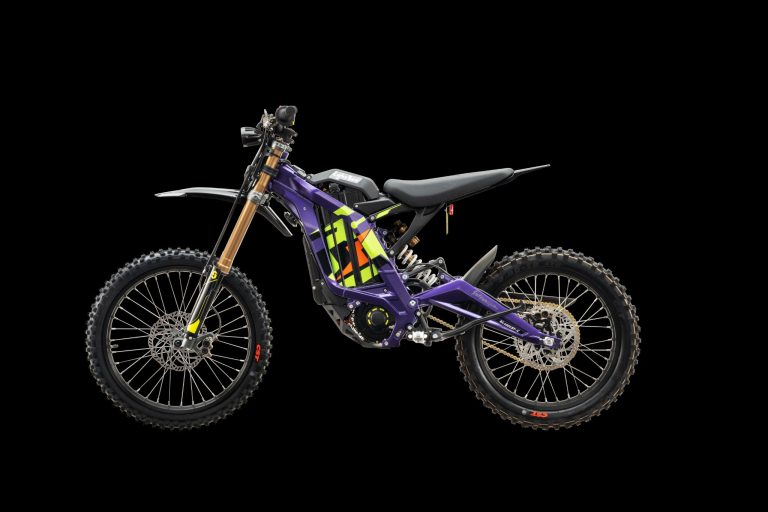
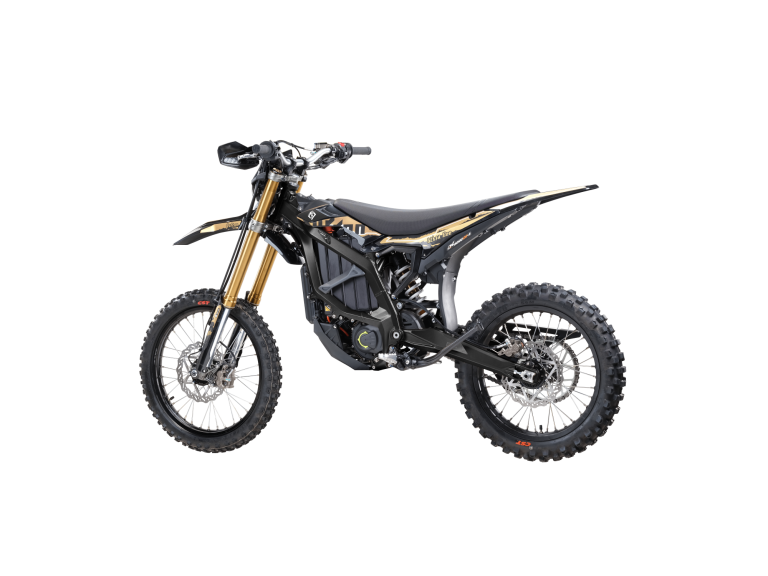
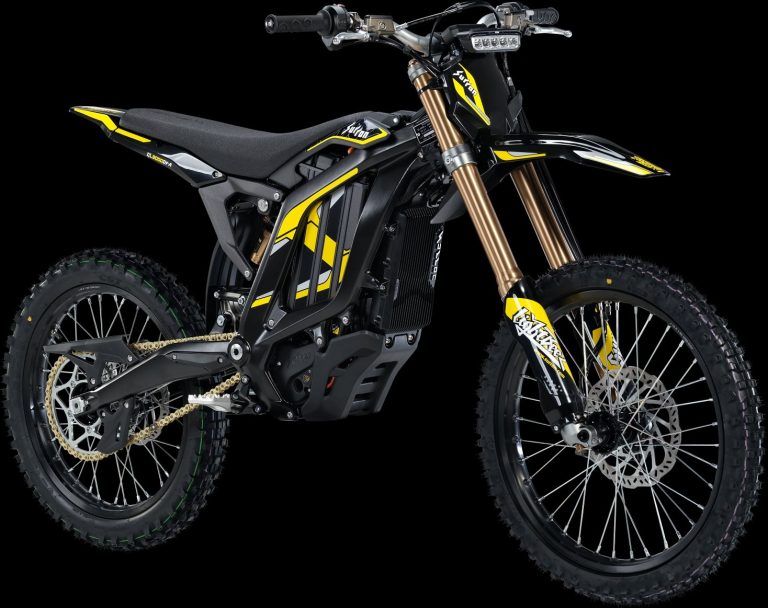
The Surron Storm Bee is the brand’s full-size electric dirt bike. Where the Light Bee and Ultra Bee started life closer to the e-moto world, the Surron Storm Bee was built to sit alongside 250-class petrol enduro bikes. It has full-size wheels, long-travel suspension and enough power to keep up with traditional bikes on fast trails.
In this review we explain the Surron Storm Bee specs in plain language, what the numbers mean on the trail, how it compares with the Ultra Bee and Light Bee 2, and who should consider one. Specs come from Australian distributor data, and everything is current as of October 2026.
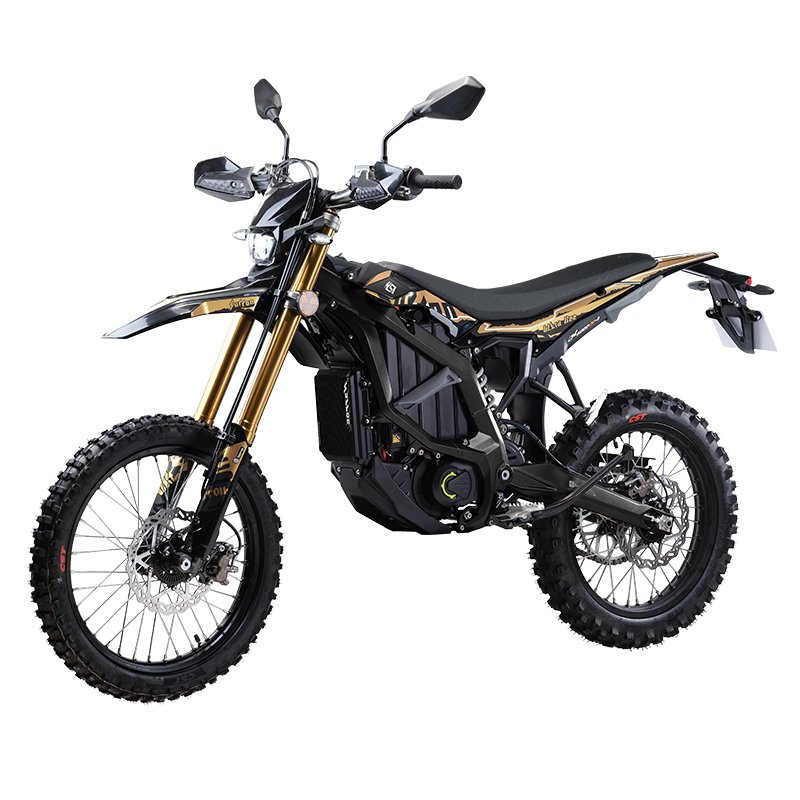
Surron Storm Bee at a glance
Here are the headline Surron Storm Bee specs as published by Australian distributor Ampd Bros:
| Spec | Surron Storm Bee |
|---|---|
| Rated power | 10 kW |
| Peak power | 22.5 kW |
| Maximum torque | 520 Nm |
| Top speed | 110 km/h |
| 0 to 50 km/h | 1.9 seconds |
| 0 to 80 km/h | 3.9 seconds |
| Battery | 90 V, 48 Ah, 4,320 Wh, removable |
| Charge time | 3 to 4 hours with fast charging |
| Range | Over 100 km at a steady 50 km/h |
| Weight | 97 kg without battery, battery about 29 kg |
| Seat height | 940 mm |
| Suspension | 47 mm inverted fork, 290 mm travel front and rear |
| Wheels | 21 inch front, 18 inch rear |
Those numbers put the Surron Storm Bee in a very different class from the Light Bee X. It is taller, heavier and far more powerful, with suspension travel close to a full-size enduro bike.
1. Power: 22.5 kW peak
The Surron Storm Bee motor is rated at 10 kW and peaks at 22.5 kW. In practice that means strong, sustained pulling power rather than a short burst. The rated figure is what the motor can hold for long periods, which matters on long climbs or fast fire roads where a smaller bike would overheat or step down its power.
For comparison, the 2026 Light Bee X peaks at 10 kW. The Surron Storm Bee’s continuous rating alone matches that peak.
2. Torque: 520 Nm
Electric motors deliver their torque from a standstill, so 520 Nm makes the bike launch hard out of corners and up steep pinches. That is the same headline torque figure Surron Australia quotes for the Ultra Bee HP in Turbo mode, so the two bikes feel closer than the power numbers suggest at low speed. The Storm Bee pulls away at higher speeds.
3. Top speed: 110 km/h
The Surron Storm Bee is quoted at 110 km/h. That is quicker than the Ultra Bee HP’s 95 km/h and well ahead of the Light Bee X. On the trail, you will rarely use the top end, but the extra headroom means the bike is relaxed at 70 to 90 km/h on open fire trails.
4. Battery: 90 V and 4.3 kWh
The battery runs at 90 V with 48 Ah of capacity, for 4,320 Wh in total. That is a big pack by electric dirt bike standards. The higher voltage helps the motor deliver its power efficiently, and the capacity supports a range of more than 100 km at a steady 50 km/h. Real trail range will be lower once you add hills, sand and hard acceleration.
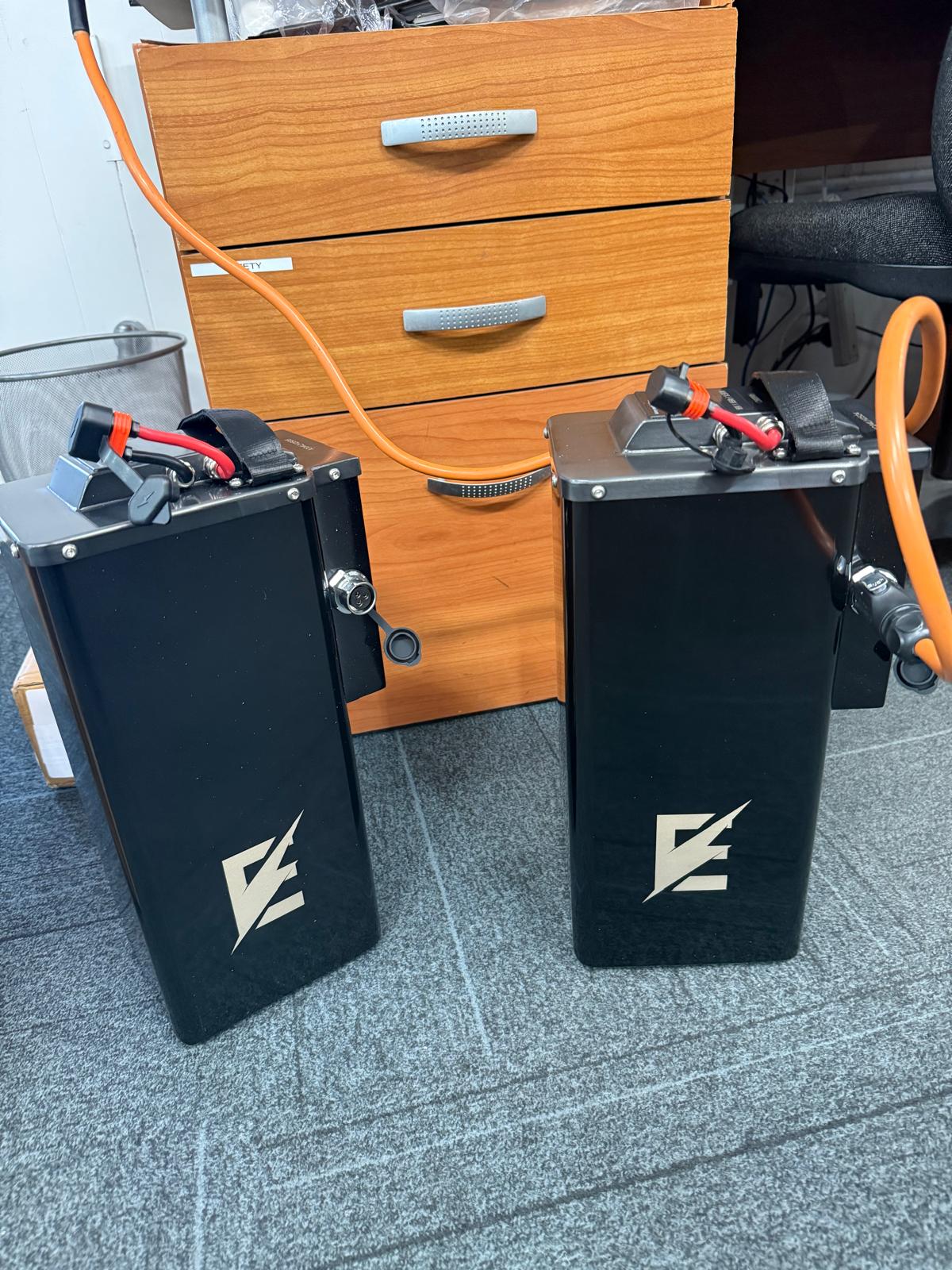
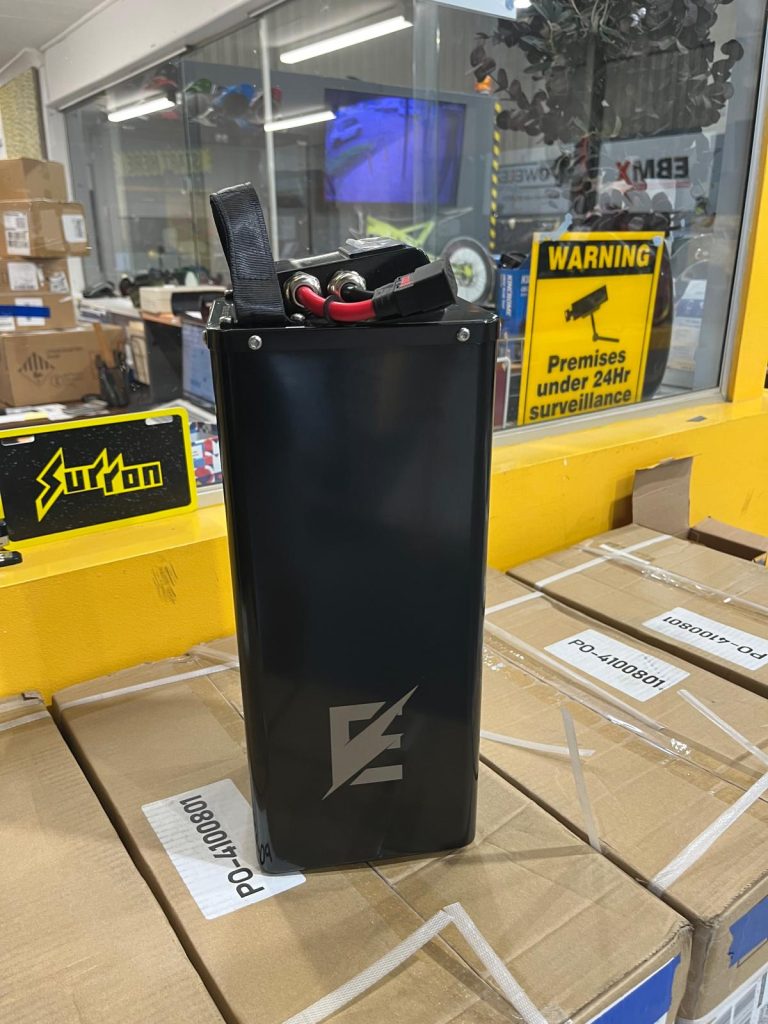
The pack is removable and weighs about 29 kg, so lifting it out is a two-hand job. Many owners charge it on the bike in the garage and only remove it for storage or transport.
5. Weight: around 126 kg ready to ride
Ampd Bros lists 97 kg without the battery and about 29 kg for the pack, so the Surron Storm Bee weighs roughly 126 kg ready to ride. That is much heavier than a Light Bee and heavier than many 250 cc petrol enduro bikes. The weight sits low in the chassis, which helps stability, but you will notice it when picking the bike up after a fall.
6. Suspension: 290 mm of travel
A 47 mm inverted fork and an air rear shock give 290 mm of travel at each end. That is full-size enduro territory, and it is the main reason it handles rough tracks so much better than the smaller Surron models. Big jumps, rocky descents and whoops are far less punishing.
7. Seat height: 940 mm
At 940 mm, the seat is tall. Riders under about 175 cm may find it hard to touch the ground. If you are coming from a Light Bee at 830 mm, the difference is significant. Sit on one before buying if you are not used to full-size bikes.
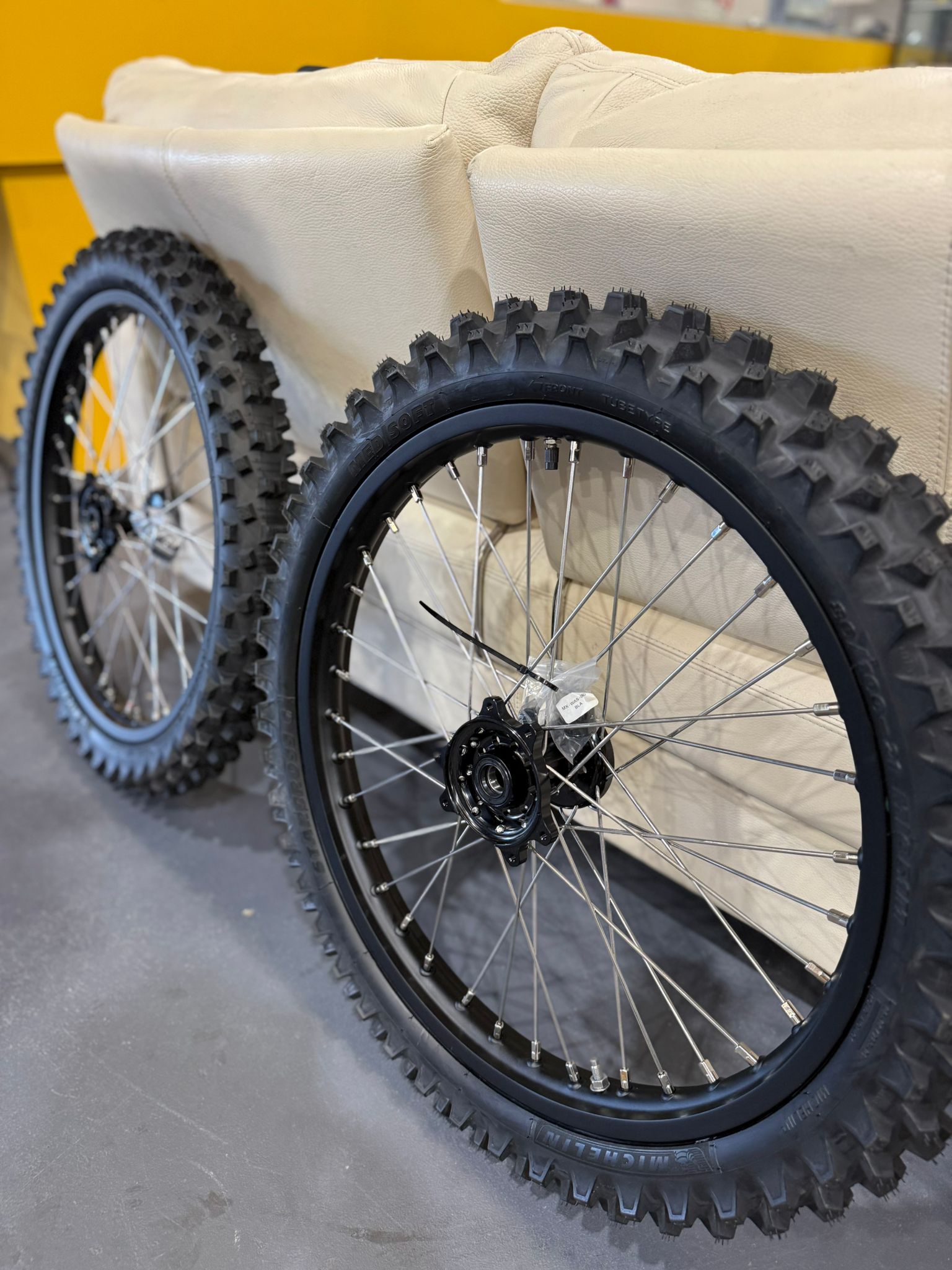
8. Wheels and tyres: full-size 21/18
The 21 inch front and 18 inch rear spoked wheels match a petrol enduro bike. That opens up the full range of motorcycle tyres, from hard-terrain knobbies to soft sand tyres, and it means the bike rolls over ruts and rocks much more easily than bikes on 19 inch wheels.
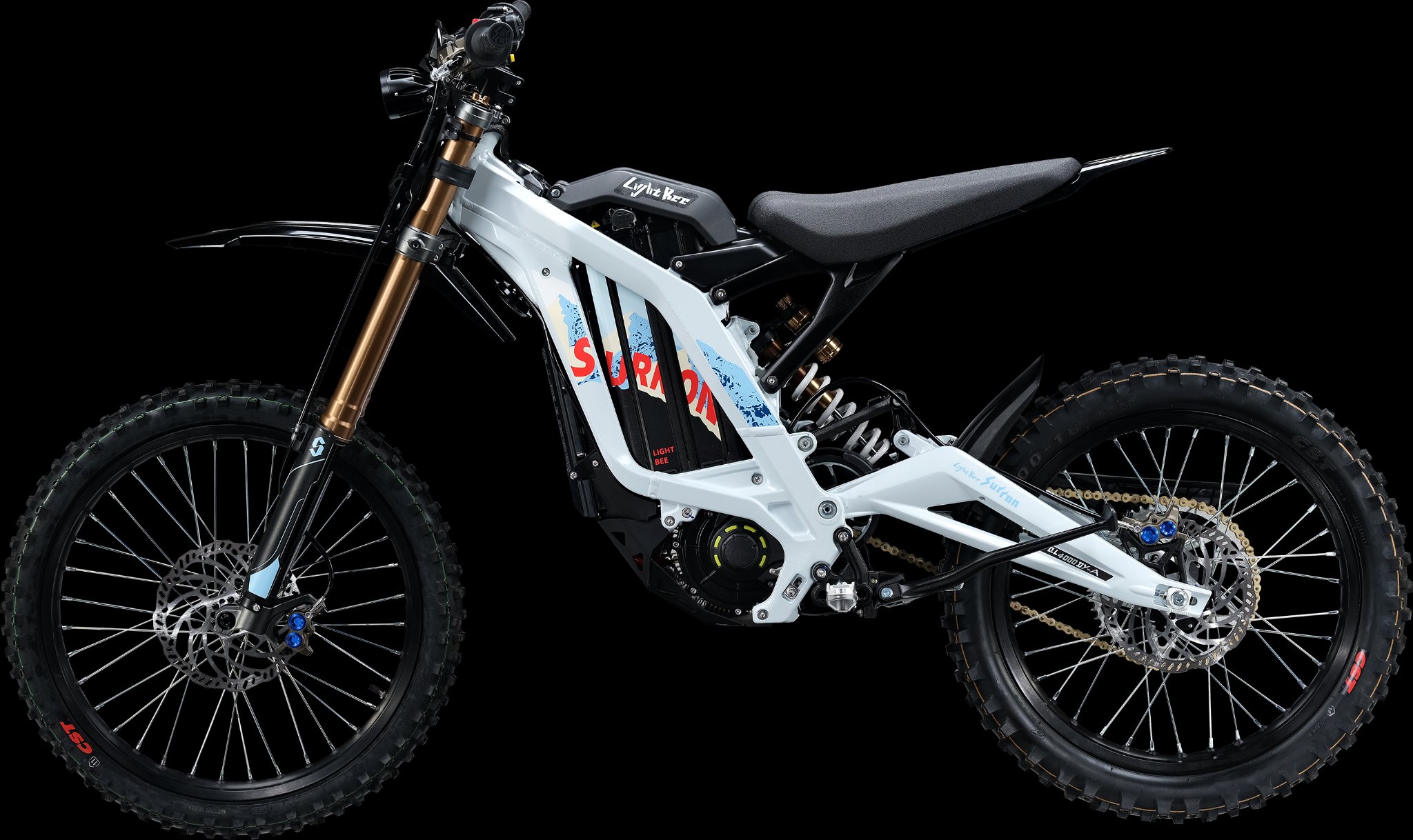
Surron Storm Bee vs Ultra Bee vs Light Bee 2
Here is how the Storm Bee lines up against the Surron bikes we sell. Ultra Bee HP and Light Bee 2 figures come from Surron Australia.
| Spec | Storm Bee | Ultra Bee HP | Light Bee 2 |
|---|---|---|---|
| Peak power | 22.5 kW | 24.5 kW (Turbo) | 24 kW |
| Torque | 520 Nm | 520 Nm (rear wheel) | 410 Nm |
| Top speed | 110 km/h | 95 km/h | 90 km/h |
| Battery | 90 V 48 Ah | 74 V 60 Ah | 78.54 V 45 Ah |
| Rated range | 100+ km at 50 km/h | 115 km at 50 km/h | 108 km at 40 km/h |
| Weight | About 126 kg | About 91 to 93 kg | About 65 kg |
| Seat height | 940 mm | 910 mm | Taller than Light Bee X |
The numbers show an interesting picture. The newer Ultra Bee HP now matches or beats the Surron Storm Bee on peak power and rated range, while weighing about 30 kg less. The Storm Bee still wins on top speed, suspension travel and full-size feel. The Light Bee 2 is far lighter again, which makes it more playful on tight trails.
You can read more in our full Surron Ultra Bee guide and our Surron model guide.
Who should buy a Surron Storm Bee?
This bike suits a specific rider:
- Experienced riders coming from 250 to 450 cc petrol bikes who want a familiar full-size feel.
- Taller riders who find the Ultra Bee cramped.
- Riders who spend most of their time on fast, open trails where top speed and long-travel suspension matter.
- Riders who want full-size wheel and tyre options.
It is less suited to:
- Beginners or younger riders, because of the weight and seat height.
- Riders on tight, technical single track, where a lighter bike is easier to place.
- Anyone who needs to lift the bike into a ute without help.
Surron Storm Bee on the road
Surron has offered road-registerable versions of the Surron Storm Bee in some markets, including models sold in Australia and New Zealand. A road version adds lights, indicators, mirrors and a number plate mount and must comply with Australian Design Rules. Licence requirements vary by state, and at this power level you should expect to need a motorcycle licence. Always check with your state road authority and the dealer before buying a road version.
For a broader look at road rules for electric bikes, our Surron e bike Australia guide explains how registration and licences work across the states.
Running costs and maintenance
Like other electric dirt bikes, the Surron Storm Bee is cheap to run compared with a petrol bike. There is no oil to change, no air filter to clean and no top-end rebuild. Typical jobs include:
- Chain or belt adjustment and replacement.
- Brake pad replacement and fluid changes.
- Fork and shock servicing, which costs about the same as on a petrol bike.
- Tyre replacement.
- Battery care: store it partly charged and avoid extreme heat.
Electricity costs are small. Even a full 4.3 kWh charge costs only a dollar or two at typical Australian household rates.
Surron Storm Bee buying tips
If you are shopping for a Surron Storm Bee, keep these points in mind:
- Check the version. Off-road and road-registerable versions differ in price and equipment.
- Confirm the battery warranty. Ask how long it lasts and what capacity loss it covers.
- Ask about parts supply. Full-size bikes use different parts from the Light Bee range.
- Test the seat height. Make sure you are comfortable at a stop.
- Compare with the Ultra Bee HP. For many riders the lighter Ultra Bee is the better all-rounder.
We do not currently list the Surron Storm Bee in our online store, but we can talk you through the options and compare it with the Ultra Bee HP we stock.
How the Storm Bee rides on Australian trails
Numbers only tell part of the story. On real Australian terrain the bike’s character shows up in a few clear ways.
Fire roads and open trails
This is where the bike is happiest. The long suspension soaks up corrugations and washouts, and the motor pulls hard from 50 to 100 km/h. Riders coming from petrol bikes say the lack of gear changes takes a little getting used to, but once you trust the instant drive, fast trails feel effortless.
Tight single track
In tight bush, the weight is noticeable. At walking pace you need careful throttle and rear brake control, and the bike takes more effort to pick up after a tip-over. Experienced riders adapt quickly; newer riders may find a lighter bike less tiring.
Sand and loose climbs
Full-size wheels and strong torque are a real advantage in sand. The bike floats over soft ground better than smaller e-motos, and steep loose climbs are easier because you can meter the power precisely. Battery use climbs quickly in sand, so plan shorter loops.
Rocky descents
Long-travel suspension and good brakes make rocky descents more comfortable. Regenerative braking, where fitted and enabled, helps control speed without overheating the brakes on long downhills.
Battery range in the real world
The quoted figure of more than 100 km at a steady 50 km/h is a useful benchmark, but trail riding is rarely steady. Expect less range when you:
- Ride in the most powerful mode for long periods.
- Climb a lot or ride in sand and mud.
- Carry a heavy rider or a loaded backpack.
- Ride in very cold or very hot conditions.
- Accelerate hard out of every corner.
Many riders plan a typical trail session at roughly half to two-thirds of the rated figure. If you ride long loops far from a power point, carrying a spare battery or planning a charging stop is sensible.
Charging and battery care
Looking after the 4.3 kWh pack protects your biggest single investment. Good habits include:
- Using the supplied charger, or a charger approved by the manufacturer.
- Charging in a cool, dry place away from flammable materials.
- Not leaving the battery at 100 percent for weeks. Store it partly charged if you will not ride for a while.
- Keeping connectors clean and dry.
- Letting the battery cool after a hard ride before charging.
State fire services publish general lithium-ion safety advice, and the Fire and Rescue NSW lithium-ion battery safety page is a useful starting point for any electric bike owner.
Upgrades owners commonly make
Even a full-size bike benefits from a few changes once you know how you ride. Popular upgrades include:
- Tyres matched to your terrain, from hard-pack to soft sand.
- Suspension tuning with springs or valving set for your weight.
- Bash plates and guards to protect the motor and battery case.
- Handlebar and lever upgrades for better control.
- Lighting if you ride early mornings or late afternoons.
Avoid controller or battery modifications unless they are approved, because they can void warranty and affect safety.
Storm Bee vs a petrol 250 enduro bike
Because the Storm Bee targets the same riders as a 250 cc petrol enduro bike, it helps to compare them directly.
- Power delivery: the electric motor gives instant torque with no clutch or gears. A petrol 250 builds power through the rev range and needs gear changes.
- Noise: the Storm Bee is far quieter, which can mean fewer complaints from neighbours and other trail users.
- Weight: at about 126 kg ready to ride, it is in the same range as or heavier than many petrol 250 enduro bikes.
- Range: a petrol bike can be refuelled in minutes. The Storm Bee needs a charge or a spare battery.
- Maintenance: no oil, filters, spark plugs or top-end rebuilds on the electric bike.
For riders who ride shorter, more frequent sessions near home, electric makes a lot of sense. For riders who do long remote trips with no power, petrol still has an advantage.
Gear and set-up for a full-size e-moto
A bike with this much speed needs proper protection. Before your first ride, make sure you have:
- A full-face helmet that meets Australian standards, plus goggles.
- Motocross boots with ankle and shin protection.
- Knee braces or knee guards, body armour or a roost guard, and elbow guards.
- Gloves, riding pants and a long-sleeved jersey.
- A hydration pack for long rides in the heat.
Set up the cockpit before you head out. Adjust lever angles so you can cover the brakes while standing, set the bar position to suit your height, and set suspension sag for your weight. A workshop can help with sag and spring rates if you are new to full-size suspension. Spending an hour on set-up makes the Surron Storm Bee feel lighter, more stable and more predictable from the first ride.
Is the Storm Bee still worth considering in 2026?
The arrival of the Ultra Bee HP and Light Bee 2 has changed the Surron line-up. Both newer bikes offer similar or higher peak power in much lighter packages. That makes the Surron Storm Bee a more specialised choice: it is for riders who value full-size suspension, big wheels and top-end speed above low weight. If those are your priorities, it remains one of the most capable electric enduro bikes available. If you want the most versatile bike for mixed Australian trails, the lighter models are worth a close look first.
Surron Storm Bee FAQs
How fast is the Surron Storm Bee?
The quoted top speed is 110 km/h, with 0 to 50 km/h in 1.9 seconds.
How much does a Surron Storm Bee weigh?
About 97 kg without the battery and roughly 126 kg with the 29 kg battery fitted.
What battery does the Surron Storm Bee use?
A removable 90 V, 48 Ah lithium-ion pack with 4,320 Wh of capacity.
Is the Surron Storm Bee better than the Ultra Bee?
It is faster and has more suspension travel, but it is much heavier. The 2026 Ultra Bee HP matches it on peak power and suits most trail riders better.
Can you register a Surron Storm Bee in Australia?
Road-registerable versions have been sold in Australia. Check with the dealer and your state road authority for the exact model and licence requirements.
Final thoughts on the Surron Storm Bee
The Surron Storm Bee is the closest the brand has come to a traditional full-size enduro bike. It has the power, travel and wheel sizes to run with petrol bikes on fast trails, and it brings the low running costs of electric. The trade-off is weight and seat height. If you want a full-size feel, it is an impressive machine. If you want the best all-round Surron for Australian trails, compare it carefully with the lighter Ultra Bee HP before you decide.
Leave a Reply