Surron forks have a huge effect on how your bike handles. They decide how well the front wheel tracks over rocks and roots, how stable the bike feels under braking and how much punishment reaches your hands and arms. Many riders upgrade power first, but experienced riders often say the forks are the smartest first upgrade.
In this guide we explain the stock Surron forks on each model, how to set them up, how often to service them, common problems and eight proven upgrades. Specs come from Surron Australia and are current as of October 2026.
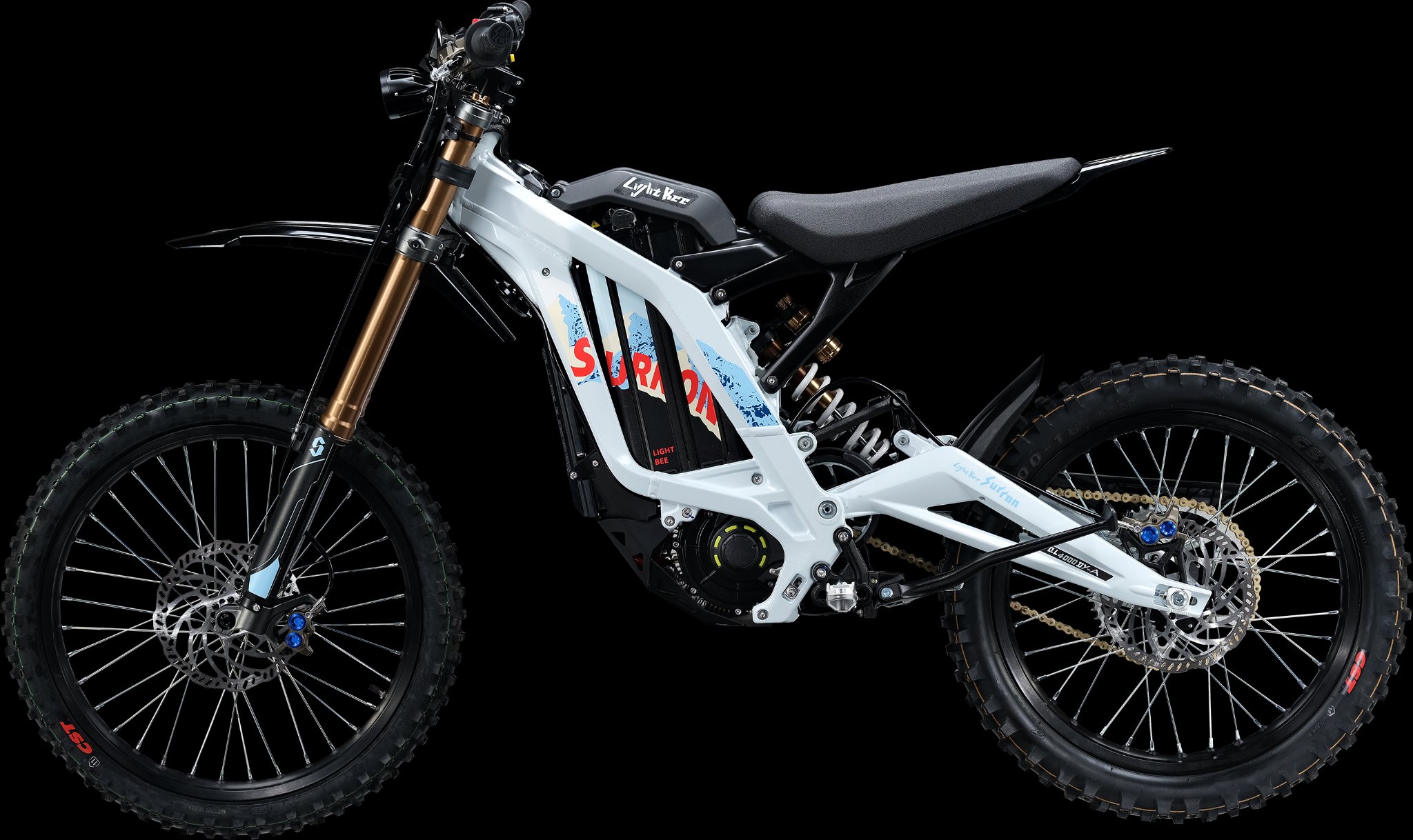
Stock Surron forks by model
Each model comes with different front suspension:
| Model | Stock fork | Travel |
|---|---|---|
| Hyper Bee | 35 mm inverted dual-crown fork | 170 mm |
| Light Bee X (2025 and 2026) | Inverted coil-spring hydraulic fork | 200 mm |
| Light Bee 2 | 38 mm Kashima-coated dual-chamber fork | 215 mm |
| Ultra Bee HP | 37 mm inverted fork | 240 mm |
Travel is the distance the wheel can move. More travel absorbs bigger hits, but the quality of the damping matters just as much as the number.
How Surron forks work
Every fork has two jobs: a spring holds the bike up and absorbs impacts, and a damper controls how fast the fork compresses and rebounds. Without damping, the bike would bounce like a pogo stick. Most Surron forks use coil springs or air springs with oil damping.
Key adjustments you may see include:
- Preload: changes the starting tension on the spring and the ride height.
- Compression damping: controls how quickly the fork compresses over bumps.
- Rebound damping: controls how quickly the fork extends after a hit.
- Air pressure: on air forks, sets spring rate for rider weight.
Not every stock fork has every adjustment. Check your owner’s manual to see what your Surron forks offer.
Setting up your Surron forks
Good set-up makes stock forks feel far better. Follow these steps:
- Set sag. Sit on the bike in riding gear and measure how far the fork compresses. Many riders aim for about 20 to 30 percent of travel, but follow your fork’s guidance.
- Start with rebound in the middle. Too fast and the front kicks back; too slow and the fork packs down over repeated bumps.
- Adjust compression for your terrain. Softer for roots and rocks, firmer for jumps and big hits.
- Make one change at a time. Ride the same section after each change so you can feel the difference.
- Record your settings. Write down clicks and pressures so you can return to a good set-up.
Set-up is free and often fixes complaints that riders blame on the hardware.
Common Surron forks problems
These are the issues we see most often:
- Too soft for heavier riders. The fork dives under braking and bottoms out on jumps.
- Harsh over small bumps. Often caused by too much compression damping, low oil or dirty seals.
- Oil on the stanchions. A sign of worn or dirty seals.
- Clunking. Can be loose bolts, worn bushings or a headset issue rather than the fork itself.
- Uneven travel. One leg working harder than the other, often after a crash.
Many problems start with dirt on the seals. Wiping your stanchions after every ride is a simple habit that saves money.
8 proven Surron forks upgrades
These upgrades run from cheap and simple to major changes.
1. Proper set-up and sag
As above, it costs nothing and is the best first step for any rider.
2. Correct spring rate
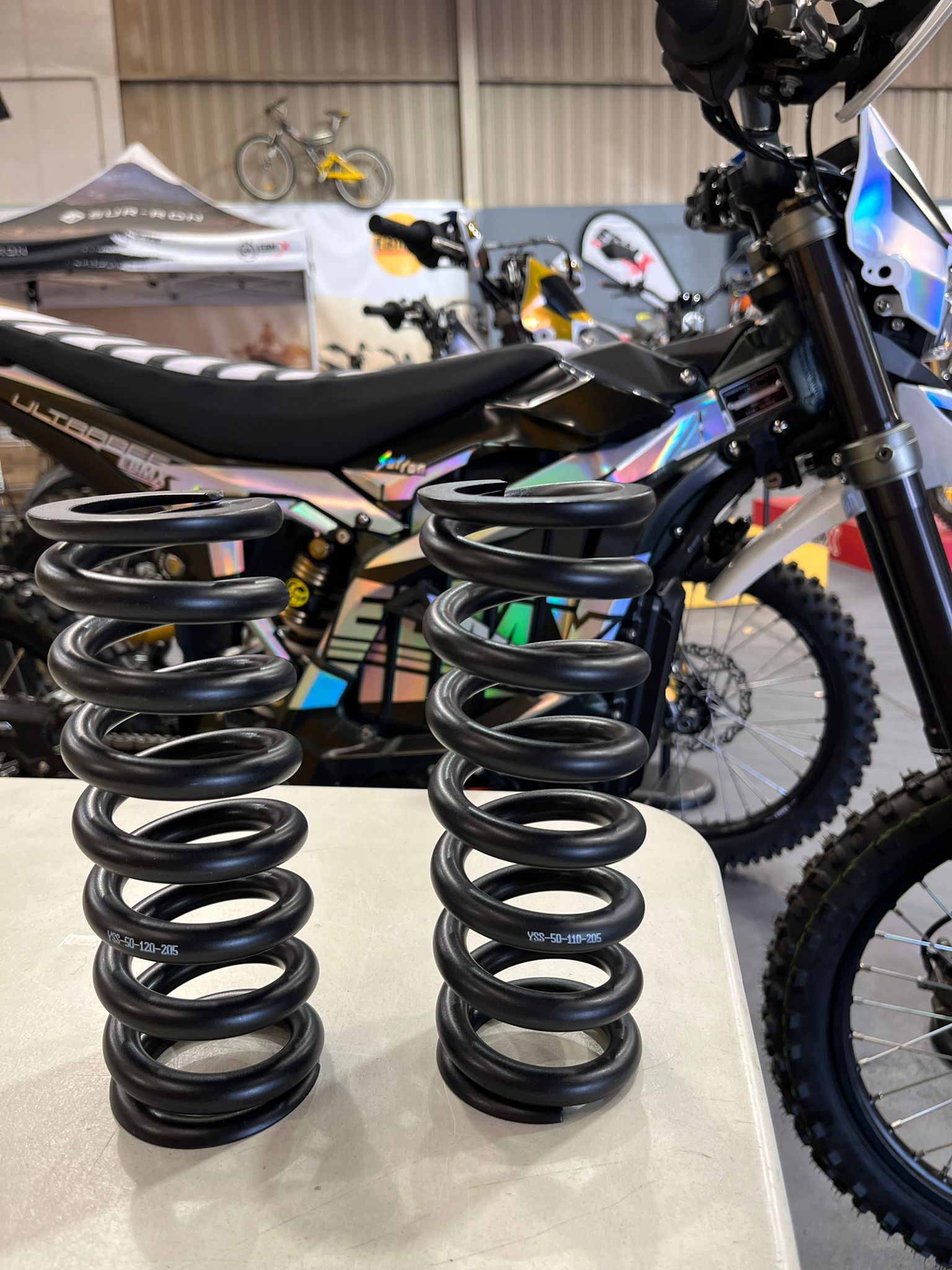
Stock springs suit an average rider. If you are much heavier or lighter, a different spring rate makes a big difference. A correctly sprung fork sits higher, resists diving and feels more controlled.
3. Fresh oil and seals
A fork service with fresh oil and new seals restores the original feel. Old oil breaks down and stops damping properly.
4. Valving changes
A suspension specialist can change the internal valving to suit your weight and riding. This is how racers get a fork that feels plush on small bumps and firm on big hits.
5. Fork guards
Guards protect stanchions from rocks and roost. A scratched stanchion quickly destroys seals.
6. Steering damper
Not strictly part of the fork, but a steering damper reduces head shake at speed on rough ground. It suits faster riders on bikes with upgraded power.
7. Aftermarket fork upgrade
Many Light Bee X owners replace the stock fork with a higher-end unit. Popular choices have included downhill mountain bike forks and purpose-built e-moto forks with more adjustment and better damping. A quality upgraded fork can transform the bike on rough trails, but it is a significant investment.
8. Matching rear shock upgrade
If you upgrade the forks, the rear should match. A plush front and harsh rear makes the bike unbalanced. Our range includes Ultra Bee upgraded rear shock springs and rear suspension parts for the Light Bee.
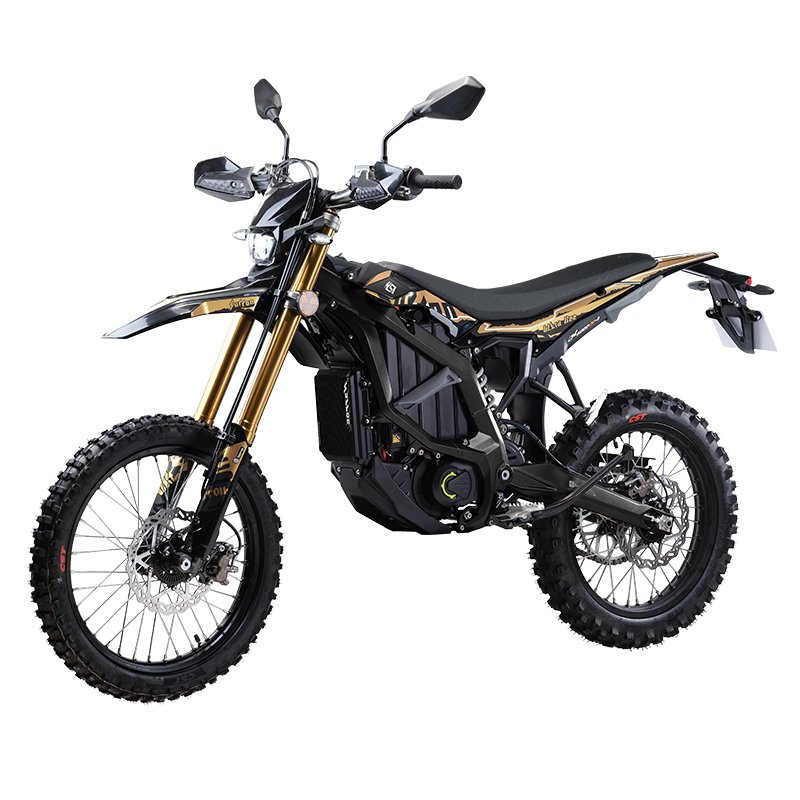
Choosing aftermarket Surron forks
If you decide to replace the stock unit, consider:
- Travel: match or slightly exceed the stock travel so geometry stays balanced.
- Axle and wheel fit: some forks need a different front wheel hub or adapters.
- Crown and steering stem: check compatibility with your frame.
- Brake mounts: make sure your caliper and rotor size are supported.
- Rider weight and riding style: buy a spring or air spring suitable for your weight.
- Service support: choose a brand that local suspension shops can service.
Changing forks can also change the bike’s head angle and ride height, which affects handling. A good workshop will set the whole bike up after the change.
How often to service Surron forks
Service intervals depend on how hard and where you ride. A rough guide:
- Every ride: wipe stanchions, check for oil leaks, check bolts.
- Every few months: check bushings for play and clean seals.
- Every 50 to 100 hours or once a year: full oil change and seal service.
Riders in dusty or muddy conditions should service more often. Manufacturer intervals in your owner’s manual take priority.
Surron forks on the Light Bee 2
The Light Bee 2’s 38 mm Kashima-coated fork is a big step up from the Light Bee X. Kashima is a low-friction coating that helps the fork move smoothly over small bumps. With 215 mm of travel, the Light Bee 2 handles rough ground far better than earlier Light Bees, and many riders will be happy with the stock set-up after correct sag and spring choice.
Surron forks on the Ultra Bee
The Ultra Bee’s 37 mm inverted fork with 240 mm of travel suits a heavier, full-size bike. Upgrades on the Ultra Bee usually focus on spring rates and valving for heavier riders, because the bike already has generous travel.
Safety checks for your front end
Your forks are a safety part. Before every ride:
- Push down hard on the bars. The fork should compress smoothly and return without clunks.
- Hold the front brake and rock the bike. Any clunk can indicate loose bolts or worn bearings.
- Check the axle and pinch bolts are tight.
- Look for oil on the stanchions and wheel rim.
- Check that the brake hose and wiring are not stretched at full lock.
If you find a problem, fix it before riding. A failing front end can cause a serious crash.
When to call a suspension specialist
Some jobs are best left to a specialist:
- Internal valving changes.
- Air spring and damper servicing on complex forks.
- Repairing bent stanchions or damaged lowers.
- Converting between spring types.
Suspension specialists can also recommend the right set-up for your weight and terrain. That expertise is often worth more than an expensive new part.
Tuning Surron forks for different terrain
Australian riders face everything from rocky Victorian high country to sandy WA tracks and muddy Queensland rainforest trails. Your fork settings should change with the terrain.
Rocky and rooty trails
Rocks and roots need a fork that moves freely on small hits. Reduce compression damping a little and make sure rebound is not so fast that the front wheel bounces off rocks. Lower tyre pressures also help the front end grip.
Fast fire trails and whoops
Speed and repeated bumps call for a slightly firmer set-up. Add a little compression damping so the fork holds up through whoops, and slow rebound slightly so the fork does not pack down.
Sand
In sand, the front of the bike tends to dig in. A slightly firmer fork and more weight on the rear help keep the front wheel floating. Many riders also run a sand-specific front tyre.
Motocross tracks and jumps
Jumps need a fork that resists bottoming. Firmer springs or more air pressure, plus more compression damping, keep the bike composed on landings.
Write down settings for each type of terrain so you can switch quickly before a ride.
Rider weight and Surron forks
Rider weight is the biggest single factor in fork set-up. Surron Australia rates the Light Bee X to carry 100 kg. If you are near that figure in riding gear, the stock springs may be too soft, and the bike will dive under braking and bottom out on bigger hits. A firmer spring or a fork with an adjustable air spring solves this.
Lighter riders and teenagers have the opposite problem. Stock springs may feel harsh because the rider is not heavy enough to use the travel. Softer springs or lower air pressure make the bike more comfortable and give better grip.
DIY fork maintenance you can do at home
You do not need to be a suspension specialist to look after your Surron forks. These simple jobs keep them working well:
- Clean after every ride. Wipe stanchions and seals with a clean cloth.
- Inspect seals. Look for oil rings on the stanchions after a ride.
- Check bolts. Make sure crown pinch bolts, axle bolts and brake caliper bolts are tight to the correct torque.
- Check bushings. Hold the front brake and rock the bike to feel for play in the fork legs.
- Bleed air. On some forks, small bleed screws release built-up air pressure. Check your manual.
Leave internal servicing to a specialist unless you have the right tools and service manual.
Protecting Surron forks from damage
A few simple steps protect your forks:
- Fit fork guards to shield stanchions from rocks.
- Avoid pressure washing directly at the seals.
- Transport the bike with fork compression straps carefully, not over-tightened.
- Store the bike upright or as recommended so seals stay lubricated.
- Inspect the forks after any crash, even a small one.
A bent stanchion or damaged seal can be expensive to repair, so prevention is worth it.
How forks affect braking and steering
Forks do more than absorb bumps. They change how the bike brakes and steers. Under hard braking, weight shifts forward and the fork compresses. A fork that dives too far steepens the steering angle, which can make the front feel nervous. A well-set-up fork holds its height better, keeping steering predictable and letting you brake harder with confidence.
That is why upgraded brakes, such as larger rotors in our Light Bee performance mods range, work best alongside properly set-up forks. For more on suspension theory, the motorcycle suspension overview on Wikipedia is a useful primer.
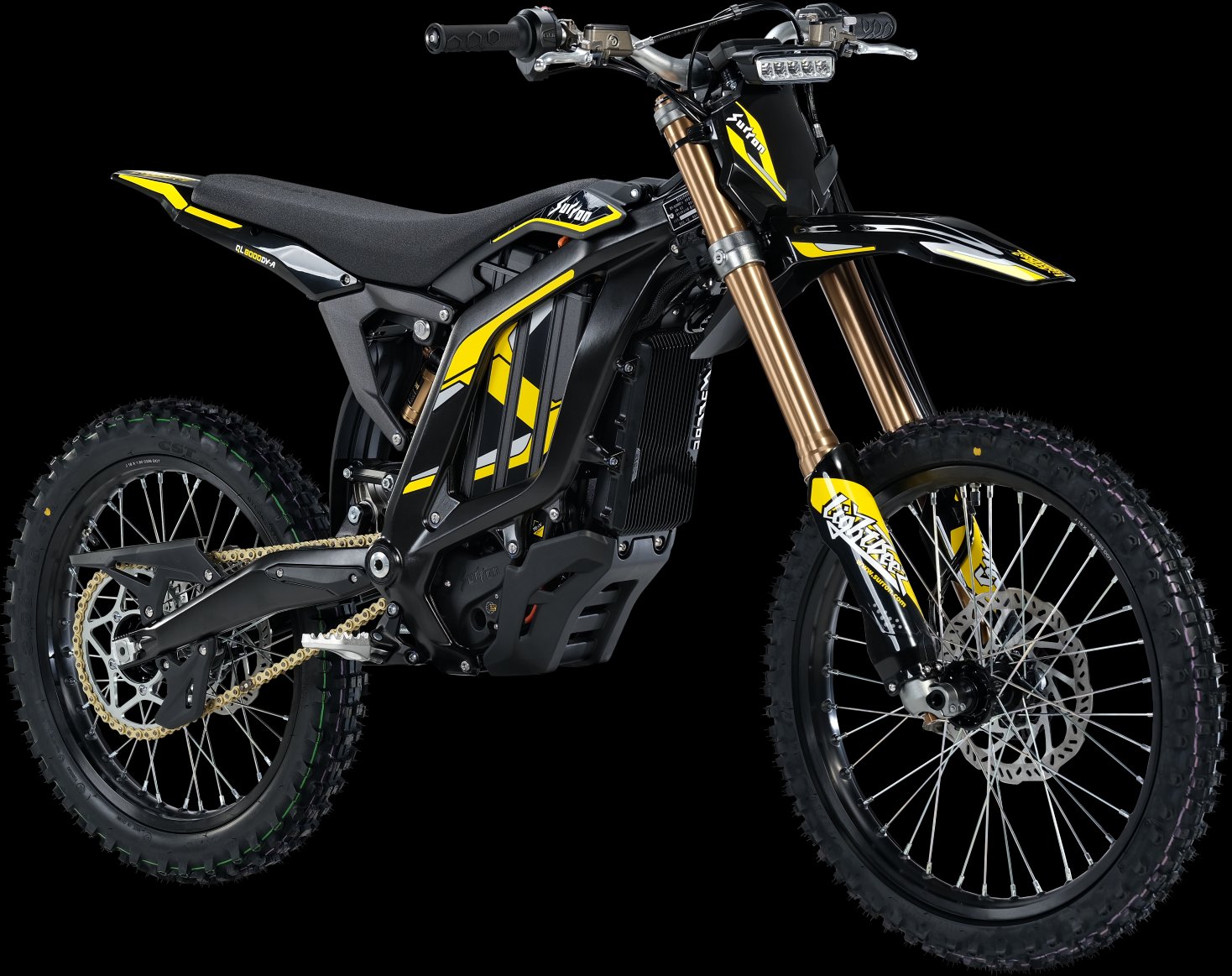
Model guides
For more on each bike’s suspension, see our model guides: the Surron Light Bee X guide, the Surron Ultra Bee guide and the Surron Hyper Bee guide.
Budgeting for Surron forks upgrades
Fork upgrades range from almost free to very expensive. Here is a rough guide to where your money goes:
| Upgrade | Typical cost range | Impact |
|---|---|---|
| Sag and clicker set-up | Free to a small workshop fee | High |
| Fork service with oil and seals | A few hundred dollars | High on older forks |
| Spring change | A few hundred dollars | High for heavy or light riders |
| Valving revalve | Several hundred dollars | High for fast riders |
| Complete aftermarket fork | Over a thousand dollars | Very high |
Most riders get the best return by starting at the top of this list. Only move to a full aftermarket fork once you have set up, serviced and sprung the stock unit correctly and still want more.
Signs your Surron forks need attention now
Stop and inspect your forks if you notice:
- A sudden change in how the front end feels.
- Oil running down the fork legs.
- A clunk when you brake or hit bumps.
- The front wheel not tracking straight after a crash.
- Bars that are no longer aligned with the front wheel.
These can point to damage that affects safety. Get the bike checked before you ride again.
Front tyre and wheel choices that work with your forks
Your front tyre works hand in hand with the fork. A tyre with a soft, grippy compound and the right pressure absorbs small bumps before they reach the fork, making the suspension feel plusher. A hard, over-inflated tyre transmits more vibration and can make good forks feel harsh.
Wheel strength matters too. Bent rims or loose spokes create a wobble that can feel like a suspension problem. Check spoke tension regularly and true the wheel if needed. For Ultra Bee owners, a stronger wheel such as our Ultra Bee 21 inch complete wheel can also change the bike’s handling by allowing a full-size front tyre.
Getting the most from new Surron forks
After fitting new or serviced forks, give them a short bedding-in period. Seals and bushings settle in over the first few rides, and the fork may feel slightly firmer at first. Check sag again after a few hours, retighten bolts to the correct torque and fine-tune your clickers once the fork has settled. Small adjustments in the first weeks help you get the full benefit of the upgrade.
Quick summary: Surron forks
The key points to remember are simple. Stock Surron forks offer 200 mm of travel on the Light Bee X, 215 mm on the Light Bee 2 and 240 mm on the Ultra Bee HP. Set sag and damping before buying parts, choose a spring rate that suits your weight, keep seals clean and service the fork at least once a year. If you still want more control, valving work or aftermarket Surron forks, paired with a matching rear shock, will lift handling to a new level.
Surron forks FAQs
How much travel do stock Surron forks have?
200 mm on the Light Bee X, 215 mm on the Light Bee 2 and 240 mm on the Ultra Bee HP, according to Surron Australia.
Should I upgrade my Surron forks?
If you are heavy, ride fast or ride rough terrain, upgrading springs or the whole fork can make a big difference. Start with set-up and servicing first.
How often should I service my Surron forks?
Clean them after every ride and plan a full service about once a year or every 50 to 100 hours, depending on conditions.
Why are my Surron forks leaking oil?
Usually worn or dirty seals. Clean the seals first; if the leak continues, replace them.
Can I fit mountain bike forks to a Surron?
Some riders fit downhill mountain bike forks to the Light Bee X. Check compatibility, axle size and rider weight limits, and have a workshop fit them.
Final thoughts
Surron forks are one of the best places to spend time and money on your bike. Start with sag, rebound and compression set-up, keep seals clean, service regularly and choose the right spring rate for your weight. If you still want more, aftermarket forks and matching rear shocks can transform how the bike handles. A well-set-up front end makes every ride safer, faster and more comfortable.
Leave a Reply