The Surron battery is the most expensive single part on your bike and the one that decides how far and how fast you can ride. Looking after it well can add years to its life, while a few bad habits can shorten it dramatically. Knowing the specs of your pack also helps when you compare models or plan an upgrade.
This guide covers the Surron battery on every current model, how to charge and store it, what affects range, when to replace it, upgrade options and important safety advice. Figures come from Surron Australia and our own product listings, and are current as of October 2026.
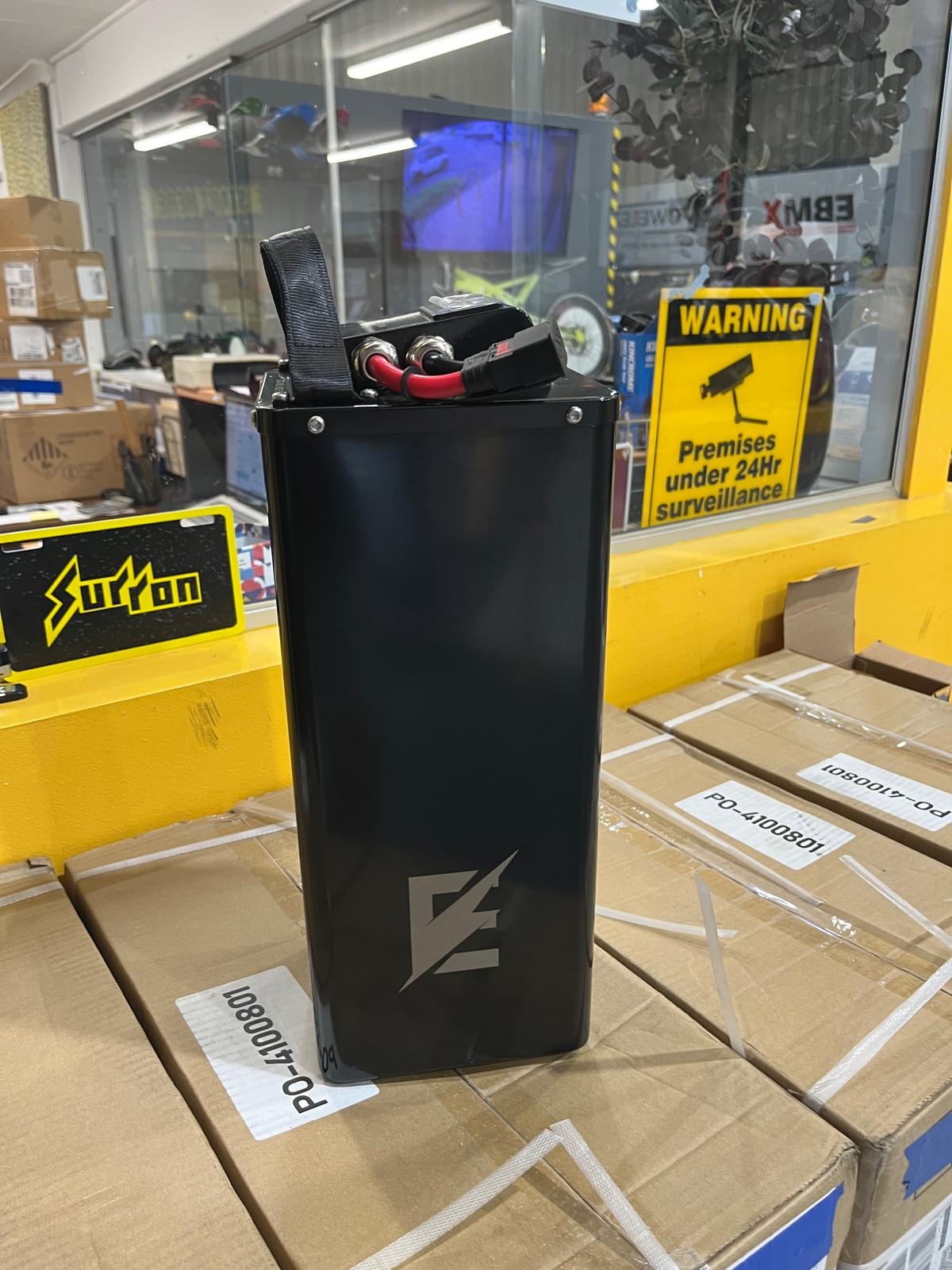
Surron battery specs by model
Each Surron model uses a different pack. Here is a summary:
| Model | Voltage | Capacity | Energy | Rated range |
|---|---|---|---|---|
| Hyper Bee | 58 V | 22 Ah | About 1.3 kWh | 56 km at 40 km/h |
| Light Bee X 2025 | 60 V | 40 Ah | About 2.4 kWh | 75 km at 40 km/h |
| Light Bee X 2026 | 72 V | About 35 Ah | About 2.5 kWh | Up to 75 km at 40 km/h |
| Light Bee 2 | 78.54 V | 45 Ah | 3.53 kWh usable | 108 km at 40 km/h |
| Ultra Bee HP | 74 V | 60 Ah | About 4.4 kWh | 115 km at 50 km/h |
Energy in kilowatt-hours is the best way to compare packs, because it combines voltage and capacity. The Light Bee 2 is notable for its semi-solid-state Surron battery, which Surron Australia says stores 3.53 kWh in a pack weighing just 14.9 kg.
How a Surron battery works
Every current model uses a lithium-based pack made of many cells wired together. A battery management system, or BMS, monitors cell voltages and temperatures, balances the cells and cuts power if something goes wrong. The BMS is why a Surron battery shuts down when it gets too hot or too low, rather than damaging itself.
Voltage drops as the pack discharges. Because speed depends on voltage, the bike is a little slower at low charge. The BMS also reduces power near empty to protect the cells.
9 essential Surron battery care tips
These habits make the biggest difference to battery life.
1. Use the right charger
Always use the charger supplied with the bike or one approved for your Surron battery. A charger with the wrong voltage can damage cells or create a fire risk. If you upgrade to a higher-voltage pack, upgrade the charger too, such as our 81 V charger for compatible 22S packs.
2. Avoid running it completely flat
Deep discharges stress lithium cells. Try to finish rides with at least 10 to 20 percent left. If you do run the pack flat, charge it soon rather than leaving it empty.
3. Do not store it full for long periods
Leaving a Surron battery at 100 percent for weeks speeds up ageing. If you will not ride for more than a couple of weeks, store it partly charged, around 40 to 60 percent.
4. Keep it cool
Heat is the enemy of lithium batteries. Do not leave the bike in direct sun in a hot ute tray or a closed shed in summer. Charge in a cool, ventilated place.
5. Let it cool before charging
After a hard ride the pack can be warm. Wait 20 to 30 minutes before charging so the cells are closer to room temperature.
6. Keep connectors clean and dry
Dirty or wet connectors cause resistance, heat and poor performance. Inspect them regularly and keep them free of mud and water.
7. Avoid pressure washing near the pack
Water can find its way into seals and connectors. Wash the bike gently and keep the pressure washer well away from the battery area.
8. Charge it every few months in storage
Over winter or long breaks, check the charge every month or two and top it back to storage level. Lithium packs slowly self-discharge.
9. Treat it gently after a crash
A heavy crash can damage cells inside the case even if the outside looks fine. If the pack is dented, swollen, smells unusual or gets hot without use, stop using it and have it checked.
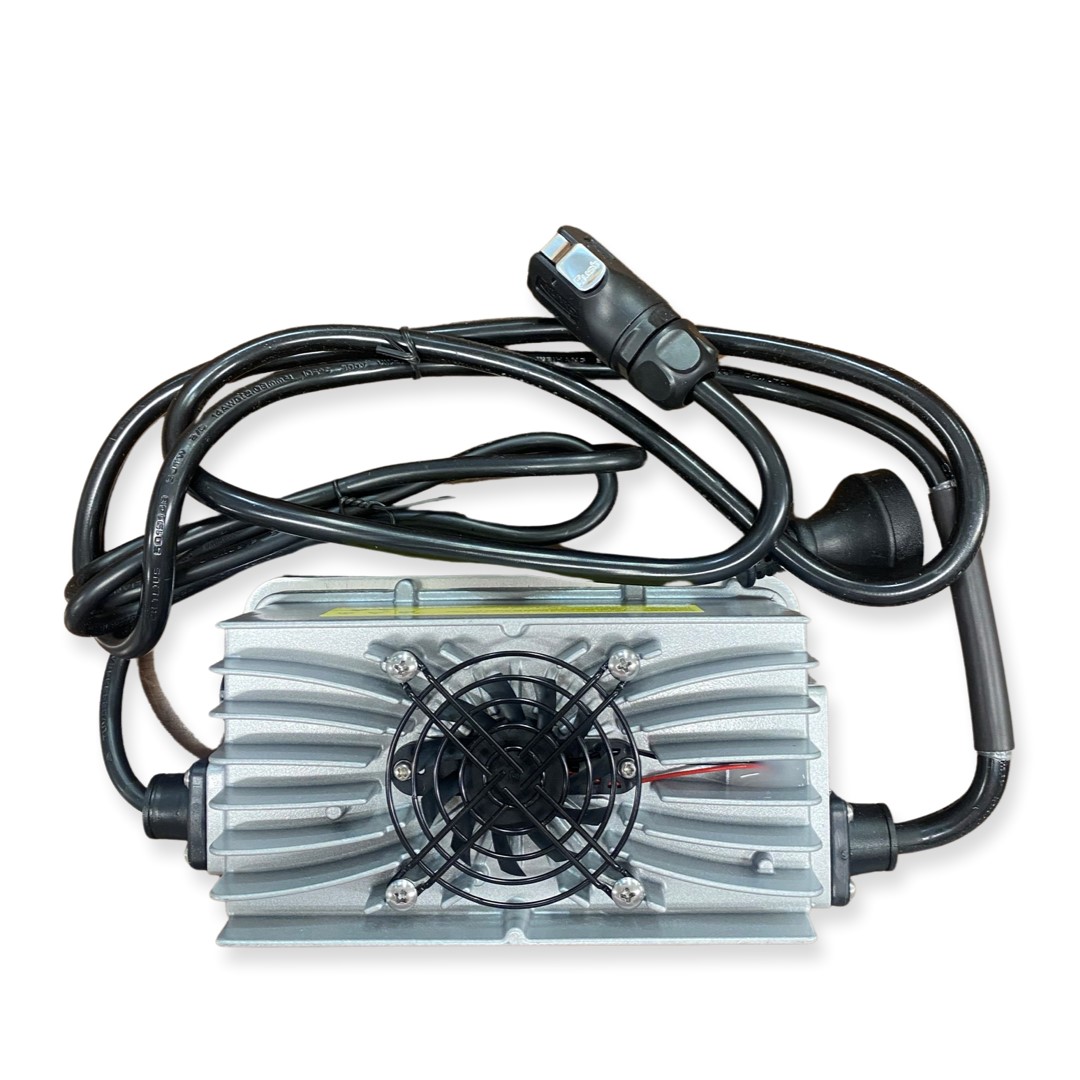
Charging your Surron battery safely
Charging is when most lithium battery incidents happen, so a few rules are worth following every time:
- Charge on a hard, non-flammable surface.
- Do not charge overnight unattended in a bedroom or near exits.
- Fit a working smoke alarm in the area where you charge.
- Unplug the charger once the pack is full.
- Never charge a damaged or swollen pack.
Fire services across Australia have issued advice on lithium-ion batteries in e-bikes and e-motos. The Fire and Rescue NSW website has practical safety guidance worth reading.
How long does a Surron battery last?
There are two ways to answer this: how long one charge lasts, and how many years the pack lasts.
Range per charge
Rated ranges are measured at a steady speed, often 40 km/h. Real trail riding uses more energy because of hills, sand, mud and hard acceleration. As a rough guide, expect real trail range of about half to two-thirds of the rated figure. A Light Bee X rated for 75 km may give 35 to 50 km of mixed trail riding.
Lifespan in years
A well-kept Surron battery can last several years before capacity drops noticeably. Lifespan depends on how often you ride, how deeply you discharge, temperatures and storage habits. Most lithium packs gradually lose capacity rather than failing suddenly. You might notice that a ride you used to finish with 30 percent left now ends at 15 percent.
Signs your Surron battery needs attention
Watch for these warning signs:
- Range has dropped noticeably compared with when the bike was new.
- The bike cuts power suddenly under load.
- The pack gets unusually hot during riding or charging.
- The case is swollen, cracked or leaking.
- The charger does not finish charging or shows a fault.
- Error codes appear on the display.
Some of these, like reduced range, are normal ageing. Others, like swelling or heat, need immediate attention. Stop using the pack and contact a specialist.
Surron battery upgrade options
An upgraded pack can add range, speed or both. Popular options in our batteries and chargers range include:
| Battery | Fits | Price (Oct 2026) |
|---|---|---|
| MPE 60 V 65 Ah | Light Bee X | $2,722.50 |
| Ride Longer 72 V 63 Ah | Light Bee X | $3,300 |
A bigger 60 V pack mainly adds range. A 72 V pack adds range and speed, but usually needs a compatible controller and may need wiring changes, such as our QS8 harness upgrade. Talk to us before ordering, because the right Surron battery upgrade depends on your controller, motor and riding style.
Spare battery vs bigger battery
If you want to ride longer, you have two choices:
- A spare stock battery lets you swap packs in a few minutes and keep riding while the other charges. It keeps the bike’s stock behaviour.
- A bigger upgraded battery gives more range in one pack, and often more performance, but costs more and may need other upgrades.
Riders who do long days away from power often prefer a spare. Riders who want one pack that does everything prefer an upgrade.
Storing a Surron battery over winter
Many Australians ride less in winter or during the wet season. Before storing the bike:
- Charge or discharge the Surron battery to around 50 percent.
- Remove it from the bike if possible.
- Store it indoors in a cool, dry place away from flammable items.
- Check the charge every month or two and top up if it falls below 30 percent.
- Charge fully the day before your first ride back.
These steps prevent the slow damage that happens when a pack sits full or empty for months.
Transporting your bike and battery
When you carry the bike in a ute or trailer, secure it so the battery does not take hard knocks. Avoid leaving the bike in a hot vehicle for long periods. If you fly or ship a spare battery, check the transport rules first, because large lithium packs are classed as dangerous goods and usually cannot be carried on passenger flights.
Common Surron battery myths
- “You must fully drain it before charging.” Not true for lithium packs. Partial charges are fine and often better.
- “Charging overnight is always fine.” It is better to charge while you are home and awake, then unplug.
- “Any charger with the right plug will work.” Voltage and charge profile must match the pack.
- “Cold weather damages the battery.” Cold reduces range temporarily. Heat causes more lasting harm.
Understanding battery numbers: volts, amp-hours and watt-hours
Battery specs can be confusing, so here is a quick explanation of the numbers you will see on a Surron battery:
- Volts (V) measure electrical pressure. Higher voltage generally means more speed and efficiency.
- Amp-hours (Ah) measure charge capacity. More amp-hours at the same voltage means more range.
- Watt-hours (Wh) or kilowatt-hours (kWh) measure total stored energy. Multiply volts by amp-hours to get watt-hours.
For example, a 60 V 40 Ah pack stores about 2,400 Wh, while a 60 V 65 Ah pack stores about 3,900 Wh. That is roughly 60 percent more energy, which translates into a similar gain in range at the same speed.
Cell quality, discharge rating and the BMS also matter. Two packs with the same headline numbers can perform differently under hard use, which is why we recommend proven brands.
Cell types and why they matter
Most Surron battery packs use cylindrical lithium-ion cells from established makers. The Light Bee 2 introduced a semi-solid-state pack, which Surron Australia rates at 320 Wh per kilogram. Higher energy density means more range for the same weight, or the same range in a lighter pack.
When you look at upgrade packs, ask:
- Which cell brand and model is used?
- What is the continuous and peak discharge rating?
- What BMS is fitted and what protections does it have?
- What warranty applies and who handles claims?
Good answers to these questions are a sign of a quality pack.
What affects Surron battery range on the trail
Real-world range varies a lot. These factors have the biggest effect:
- Riding mode. Sport or higher modes use much more energy.
- Speed. Air resistance rises sharply above 50 km/h.
- Terrain. Sand, mud and steep climbs drain the pack quickly.
- Rider weight. Heavier riders and backpacks reduce range.
- Temperature. Cold weather reduces available capacity temporarily.
- Tyre pressure. Under-inflated tyres increase rolling resistance.
- Regenerative braking. On models that support it, regen recovers some energy on descents.
Tracking your range on familiar loops helps you spot when the pack starts to age.
Replacing a worn Surron battery
Eventually every lithium pack loses enough capacity that replacement makes sense. When that time comes:
- Decide whether you want a like-for-like replacement or an upgrade.
- Check compatibility with your model, controller and wiring.
- Dispose of the old pack responsibly. Never put lithium batteries in household bins.
Many councils and battery retailers run recycling programs. The Australian Government’s B-cycle battery recycling scheme lists drop-off points, although very large e-moto packs may need a specialist recycler. Ask us if you are unsure how to dispose of an old Surron battery.
Battery warranty basics
Battery warranty terms vary between bikes and aftermarket packs. Typical points to check include:
- How long the warranty lasts and whether it covers capacity loss.
- Whether using an unapproved charger voids the warranty.
- Whether modifications to the controller or wiring affect cover.
- How claims are assessed and how long they take.
Keep your receipt and register the bike if the manufacturer offers registration. Following the care tips in this guide also helps if you ever need to make a claim.
Surron battery checklist for every ride
Make these quick checks part of your routine:
- Check the charge level before you leave and plan your loop around it.
- Inspect the case for cracks, dents or swelling.
- Look at connectors for dirt, moisture or discolouration.
- Make sure the pack is locked securely in the frame.
- After the ride, let it cool, then charge it with the correct charger.
- If you will not ride for a while, leave the Surron battery at storage charge.
These checks take a couple of minutes and catch most problems early.
Charging time by model
Charging time depends on the pack size and charger output. Typical guidance for the current models is:
- Light Bee X 2026: Surron Australia quotes about two hours from 20 to 80 percent with the standard charger.
- Light Bee X 2025: a few hours from low to full with the standard charger.
- Light Bee 2: longer than the Light Bee X, because the pack stores more energy.
- Ultra Bee HP: about 4.5 hours from empty to full, with an onboard charger stored under the seat on current models.
- Hyper Bee: a smaller pack that charges in a few hours.
Charging to 80 percent is much faster than charging to 100 percent, because the charger slows down near full to protect the cells. For everyday rides, 80 to 90 percent is often enough and is gentler on the Surron battery.
Buying a used bike: checking the Surron battery
If you are buying a second-hand bike, the battery deserves careful attention, because replacing it can cost thousands of dollars. Ask the seller:
- How old the pack is and whether it is original.
- How often the bike was ridden and how it was stored.
- Whether the pack has ever been opened, repaired or modified.
- What range the bike gives on a typical ride now.
Then inspect the case closely for damage and take the bike for a test ride long enough to see how the charge level drops. A quick ride on a full battery tells you little. A 20 to 30 minute ride gives a much clearer picture of the pack’s health.
Quick summary
Use the right charger, avoid storing the Surron battery full or empty, keep it cool, inspect it after crashes and check connectors regularly. Those five habits do more for battery life than any upgrade.
Surron battery FAQs
What battery does the Surron Light Bee X use?
The 2025 model uses a 60 V 40 Ah pack. The 2026 model moves to 72 V with about 2.5 kWh, according to Surron Australia.
How long does a Surron battery take to charge?
It depends on the charger and pack. The 2026 Light Bee X is quoted at about two hours from 20 to 80 percent with the standard charger.
Can I upgrade my Surron battery?
Yes. Larger 60 V and 72 V packs are available for the Light Bee X. Check controller compatibility before buying.
How much does a Surron battery cost?
Our upgraded Light Bee X packs cost $2,722.50 for the MPE 60 V 65 Ah and $3,300 for the Ride Longer 72 V 63 Ah.
Is it safe to charge a Surron battery indoors?
It can be, with care. Use the right charger, charge on a non-flammable surface, keep a smoke alarm nearby and do not leave it unattended overnight.
Final thoughts
A healthy Surron battery means more range, more power and fewer surprises. Use the right charger, avoid extremes of charge and heat, store it partly charged and inspect it after any crash. If you need more range, choose between a spare pack and a larger upgrade based on how you ride. Treat the battery well and it will reward you with years of reliable riding.
Leave a Reply